
Why Choosing the Best Wood for Stained Trim Makes or Breaks Your Interior
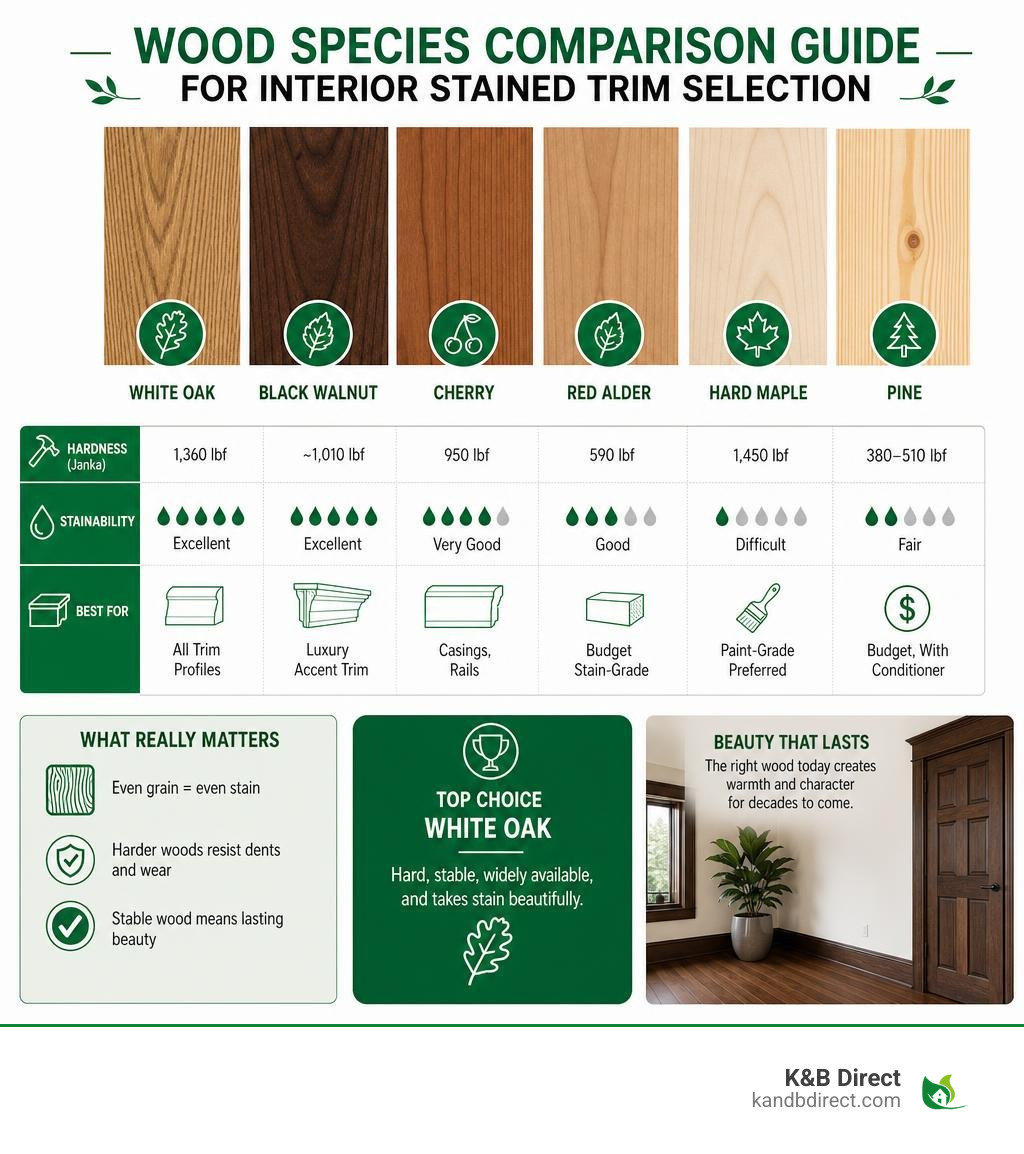
The best wood for stained trim depends on grain quality, hardness, and how evenly the wood absorbs stain. Here’s a quick-reference summary:
| Wood Species | Janka Hardness | Stainability | Best For |
|---|---|---|---|
| White Oak | 1,360 lbf | Excellent | All trim profiles |
| Black Walnut | ~1,010 lbf | Excellent | Luxury accent trim |
| Cherry | 950 lbf | Very Good | Casings, rails |
| Red Alder | 590 lbf | Good | Budget stain-grade |
| Hard Maple | 1,450 lbf | Difficult | Paint-grade preferred |
| Pine | 380–510 lbf | Fair | Budget, with conditioner |
White oak is the top choice for most homeowners — it’s hard, stable, widely available, and takes stain beautifully. Cherry is ideal if you want a wood that deepens in color over time. Avoid hard maple for staining unless you’re prepared to use a dye or pre-stain conditioner, as its tight grain resists even pigment penetration.
Walk into any home with rich, dark-stained trim lining the doorways and baseboards, and you’ll immediately feel the difference in warmth and character. That look doesn’t happen by accident — it starts with picking the right wood before a single board is cut.
The wrong choice leads to blotchy finishes, warped trim, and joints that gap open after a season or two. The right choice means trim that looks polished for decades.
Not all wood stains the same way. Oak drinks stain evenly and shows off its grain. Maple resists it. Pine can go patchy without proper prep. Each species behaves differently — and those differences matter enormously when you’re finishing trim that will be seen up close, every single day.
I’m Eryk Piatkowski, owner of K&B Direct, and after more than a decade helping homeowners select materials for kitchens, bathrooms, and interior millwork, I’ve guided countless renovation projects toward the best wood for stained trim that fits both the design vision and real-world performance needs. In the sections below, we’ll break down exactly which species work, which to avoid, and how to get a flawless stained finish every time.
Simple best wood for stained trim word guide:
Evaluating Species: Finding the Best Wood for Stained Trim
When searching for the best wood for stained trim, we must look beyond surface aesthetics. Wood density, grain structure, and natural cell porosity dictate how deep a pigment penetrates and how well the trim withstands daily household traffic. High-traffic areas like baseboards and door casings take bumps from vacuum cleaners, pets, and shoes. A wood that is too soft will dent easily, fracturing the surface finish.
Grain structure also determines visual texture. Coarse, open-grained hardwoods display distinct cathedral patterns that highlight rich stains, whereas tight, closed-grain woods offer smooth, subtle surfaces. Understanding these structural traits ensures your chosen material looks striking and remains durable over many years.
| Wood Species | Janka Rating | Volumetric Shrinkage | Stain Uniformity | Typical Application |
|---|---|---|---|---|
| White Oak | 1,360 lbf | 7.7% (Quartersawn) | Excellent | Baseboards, Crown, Casings |
| Red Oak | 1,290 lbf | 13.7% | Excellent | Classic Door & Window Casing |
| Hard Maple | 1,450 lbf | 9.9% | Prone to Blotchiness | Smooth Contemporary Rails |
| Cherry | 950 lbf | 9.7% | Smooth (Ages dark) | Crown Moulding, Accent Trim |
| Black Walnut | 1,010 lbf | 12.8% | Exceptional | Premium Accent & Library Trim |
| Red Alder | 590 lbf | 9.5% | Good (With Prep) | Uniform Interior Millwork |
| Eastern White Pine | 380–510 lbf | 8.2% | Blotchy without conditioner | Rustic Baseboards & Trim |
Hardwood Performance: Finding the Best Wood for Stained Trim
Hardwoods deliver exceptional strength, fine grain clarity, and long-term durability. White oak stands out as a premier selection for interior trim. Featuring a Janka hardness rating of 1,360 lbf, white oak resists impacts effortlessly while accepting stain coats evenly. Its natural tan-to-olive undertones provide a neutral canvas for everything from light golden coats to deep espresso tones. Red oak, rated at 1,290 lbf, remains a reliable traditional choice with prominent pinkish undertones and wide grain ribbons.
Black walnut brings unmatched elegance to interior architectural features. With a Janka rating around 1,010 lbf and rich dark tones, walnut looks breathtaking under clear finishes or light coats. American black cherry (rated at 950 lbf) is famous for its natural aging process. Over two to five years of ambient light exposure, cherry shifts from a warm peach-tan into a deep reddish-brown patina.
Hard maple possesses a Janka rating of 1,450 lbf, making it extremely dent-resistant. However, its tight, non-porous structure causes traditional pigment stains to sit unevenly on the surface. For detailed guidance on hardwood selection, review our Wood Species Guide for Interior Millwork and browse our Natural Wood Casing options.
Softwood Alternatives for the Best Wood for Stained Trim
Softwoods provide an approachable alternative for large-scale interior projects, though they require careful surface preparation. Eastern white pine and ponderosa pine feature Janka hardness ratings between 380 and 510 lbf. Because softwoods absorb liquids rapidly into earlywood while resisting them in latewood growth rings, applying stain directly can produce extreme blotchiness.
Red alder serves as an outstanding bridge between softwoods and hardwoods. With a Janka rating of 590 lbf, alder exhibits a straight, uniform grain that stains evenly without severe blotching. Douglas fir delivers strong structural stability and straight linear grain, making it ideal for historic trim reproductions. When using pine or fir, sealing knots with shellac and treating the surface with a quality pre-stain conditioner prevents resin bleed-through and ensures clean absorption. Learn more about versatile millwork materials in our Alder Trim Boards Complete Guide.
Grain Cuts and Wood Movement Dynamics
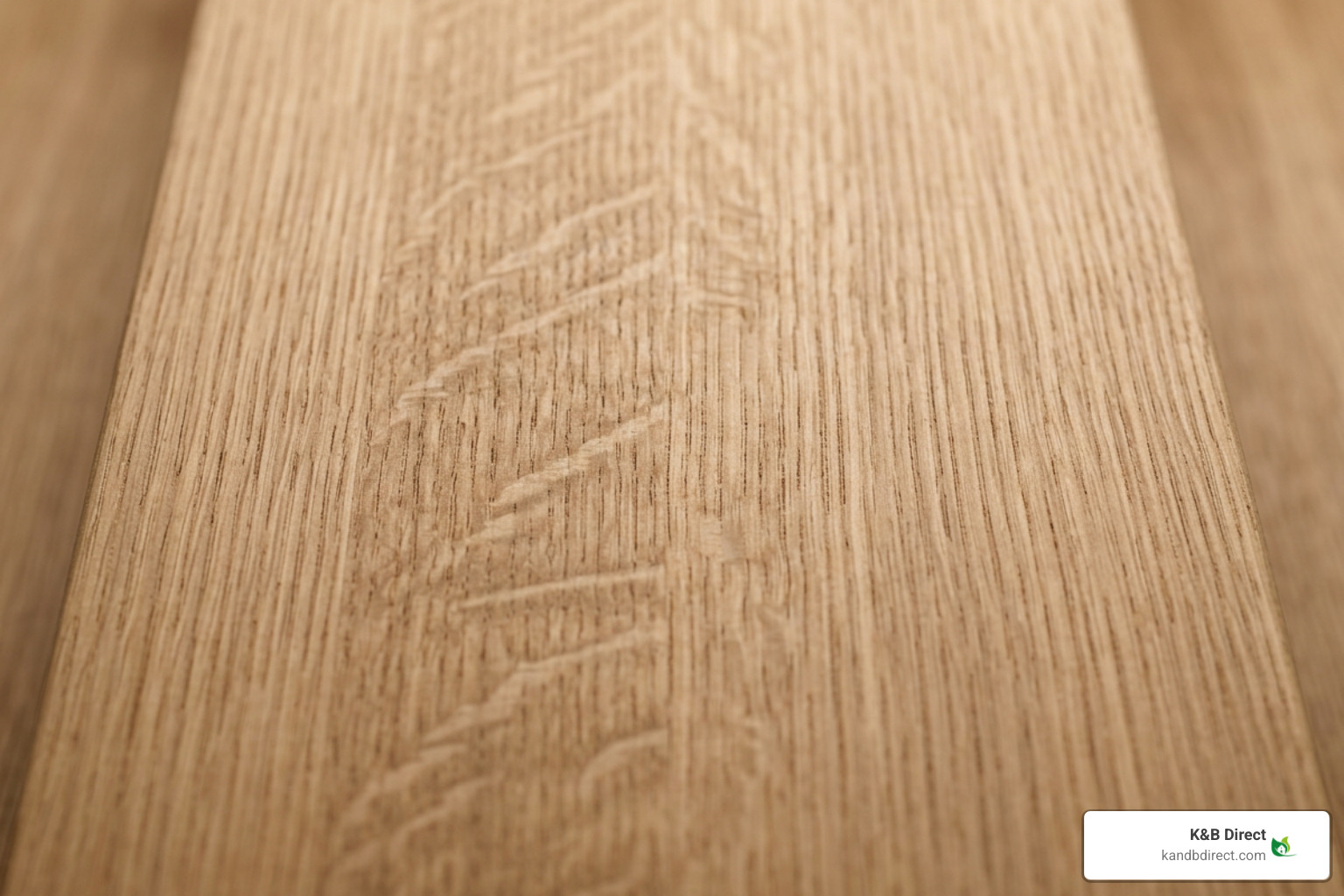
Wood is an active organic material that expands and contracts in response to indoor relative humidity variations. Atmospheric moisture changes cause boards to swell across their width. Understanding how lumber cut methods affect expansion helps preserve tight miter joints across hot summers and dry winters.
Quartersawn, Rift-Sawn, and Plain-Sawn Cuts
The way a log is milled directly dictates board stability and grain appearance:
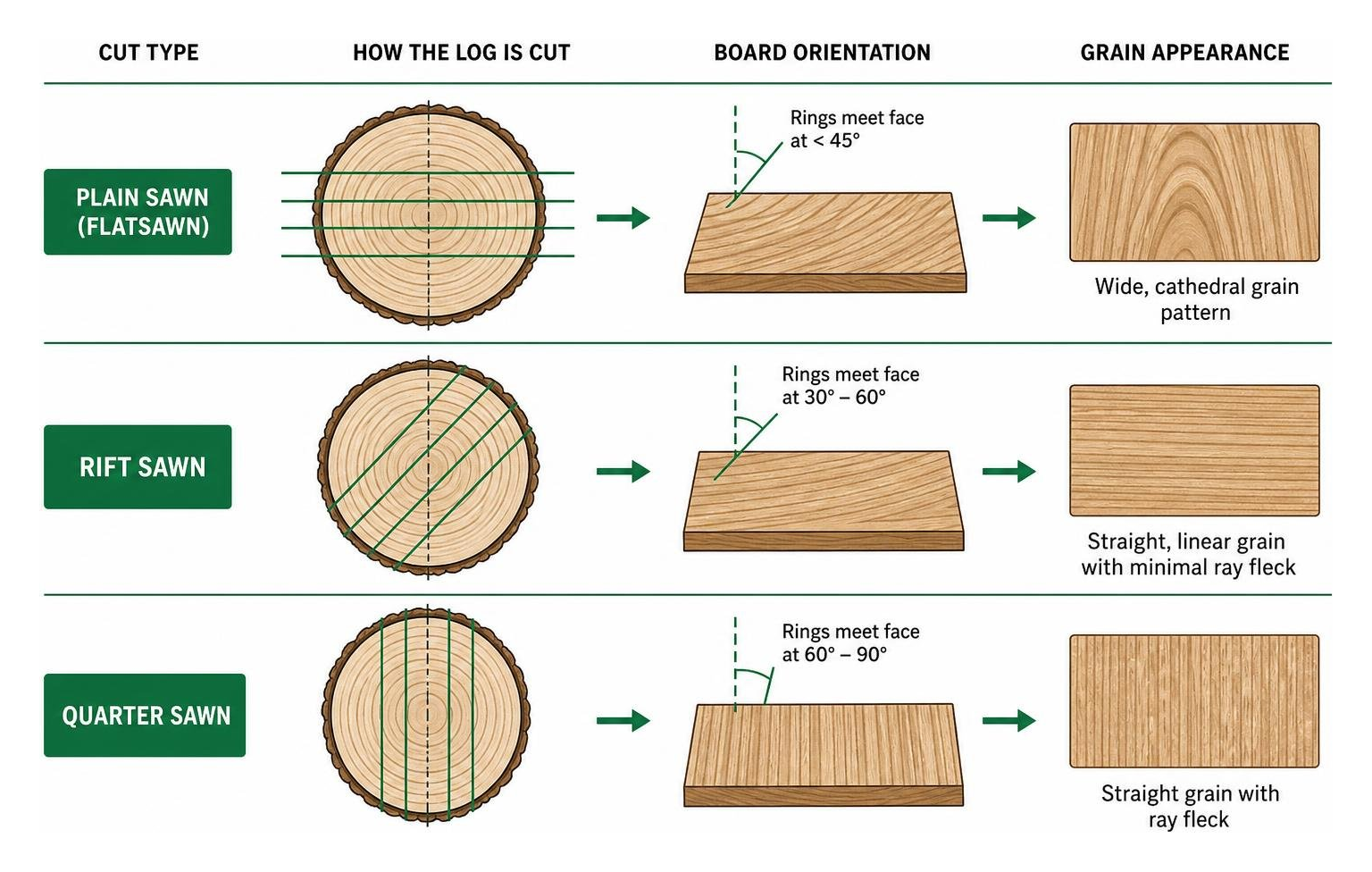
- Plain-Sawn (Flatsawn): Growth rings meet the face at angles below 45 degrees. This creates wide, sweeping cathedral grain patterns but results in higher tangential expansion (up to 13.9% in plain oak), increasing the likelihood of cupping across wide baseboards.
- Quartersawn: Growth rings intersect the board face at 60 to 90 degrees. Quartersawn white oak features a remarkably low volumetric shrinkage rate of just 7.7% — roughly half that of plain-sawn boards. This cut exposes beautiful medullary ray flecks that sparkle under rich finishes.
- Rift-Sawn: Growth rings sit at a precise 30 to 60-degree angle to the face, creating straight, parallel grain lines with zero ray fleck. Rift-sawn stock offers maximum dimensional stability and a clean, modern aesthetic.
Discover more expert millwork techniques in the guide on 6 Best Materials for Seamless Wood Finishes.
Moisture Control and Acclimation Protocols
Installing trim without adequate site acclimation is a recipe for open miters and warped runs. Indoor Relative Humidity (RH) generally targets 30% to 50%, maintaining an Equilibrium Moisture Content (EMC) between 6% and 8% in midwestern regions like Chicago, Oak Park, and Des Plaines.
- Stack with Stickers: Unpack millwork stock immediately upon delivery and stack boards flat off the floor using thin wood strips (stickers) between layers to allow 360-degree airflow.
- Acclimation Timeframe: Allow hardwoods to acclimate in the installation room for 2 to 4 weeks; softwoods require a minimum of 7 to 14 days.
- Moisture Measurement: Test moisture content using a pinless moisture meter to ensure board readings match existing interior woodwork before cutting.
Staining Protocols and Finishing Schedules

Achieving a flawless furniture-grade finish requires a systematic application approach. Preparing the surface properly ensures equal pigment absorption across the entire length of the board. Explore our complete line of profiles at Wood Moulding.
Preventing Blotchiness on Porous Species
Species with irregular pore structures — such as pine, alder, poplar, and hard maple — are prone to uneven absorption. Heartwood and sapwood sections absorb liquid at different rates, producing dark patches.
To overcome blotchiness:
- Pre-Stain Wood Conditioner: Apply a clear penetrating pre-stain conditioner to control absorption speed across soft and hard grain zones.
- Alcohol-Based Wood Dyes: Dyes penetrate deep into tight-grained species like maple without relying on heavy surface pigments that obscure delicate grain patterns.
- Dewaxed Shellac Sealer: A thin washcoat of dewaxed shellac (1-pound cut) seals thirsty sapwood, creating a smooth, workable surface for glazing coats.
Complete Finishing Schedule for Mouldings
Follow this professional finishing schedule for clean, long-lasting results:
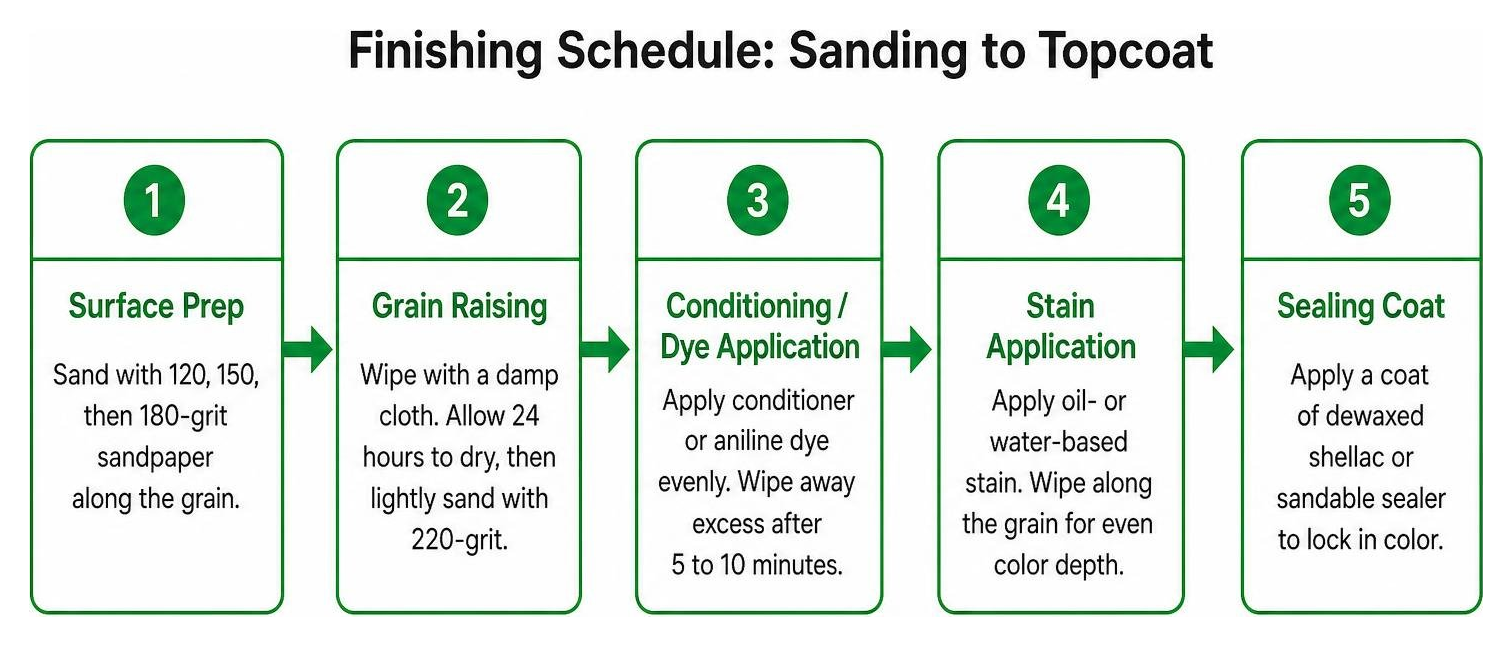
- Surface Prep: Sand raw boards progressively using 120-grit, 150-grit, and finish with 180-grit sandpaper along the direction of the grain.
- Grain Raising: Wipe boards lightly with a damp cloth to raise crushed wood fibers. Allow 24 hours to dry, then lightly knock down raised grain using 220-grit sandpaper.
- Conditioning / Dye Application: Apply pre-stain conditioner or aniline dye evenly across the surface; wipe away excess liquid after 5 to 10 minutes.
- Stain Application: Apply your chosen oil-based or water-based pigment stain with a clean cloth or brush, wiping along the grain to build uniform color depth.
- Sealing Coat: Apply a coat of dewaxed shellac or sandable sealer to lock in color pigments.
- Topcoat Protective Finish: Apply two to three thin coats of clear polyurethane or oil-modified urethane, performing a light hand-sanding with 320-grit pads between coats.
Design Integration: Color Matching and Mixing Trim Finishes
Integrating stained wood millwork into modern home interiors requires intentional visual balance. Combining rich natural wood elements with painted accents builds depth and architectural interest without overwhelming the space. Read our comprehensive advice in The Ultimate Guide to Molding and Baseboards.
Matching Stain Colors Across Species
Achieving uniform color harmony across different wood species — such as matching new oak trim to existing pine window frames — presents a unique challenge due to varying natural base tones.
- Account for Natural Undertones: Oak carries yellow/pink undertones, cherry possesses red undertones, and pine displays strong yellow/green heartwood tones.
- Utilize Custom Toners: Mix clear shellac with small amounts of dye stain to create custom spray toners that correct baseline color variations.
- Sample Board Testing: Always test finish combinations on scrap cutoffs from the exact lumber lot being installed before coating full lengths.
Combining Stained and Painted Trim
Mixing painted baseboards with stained door and window casings provides a classic visual balance:
- Strategic Frame Focus: Keep window casings, door frames, and crown moulding stained to showcase natural wood beauty, while finishing high-impact baseboards in soft white paint.
- Consistent Architectural Lines: Ensure moulding profiles match across both painted and stained surfaces to preserve design continuity.
- Proportional Balance: Pair rich, dark stained hardwoods with light, warm paint shades to maintain open, bright interior light levels.
Frequently Asked Questions
Preventing Blotchiness When Staining Softwood Trim
Applying a pre-stain wood conditioner is essential when working with softwoods like pine or fir. The conditioner fills open wood pores, slowing down absorption so pigment lays down evenly. Using gel stains instead of liquid oil stains also prevents blotching, as gel formulas sit evenly on the surface rather than soaking deep into porous sapwood pockets.
Best Wood Species for High-Humidity Interior Areas
Quartersawn white oak and genuine mahogany represent top selections for environments exposed to humidity fluctuations, such as bathrooms, basements, or enclosed porticos. Quartersawn white oak offers superior dimensional stability with minimal volumetric shrinkage (7.7%), while genuine mahogany features exceptionally low tangential shrinkage (4.1%), effectively preventing joint warping and cupping.
Mixing Hardwoods and Softwoods in One Room
Hardwoods and softwoods can be combined successfully in a single space by maintaining consistent color tones and grain scales. For example, pairing smooth red alder door casings with pine crown moulding creates a harmonious aesthetic when finished in similar warm stain shades. Ensure pre-stain conditioners are applied to softwood components to match the smooth color depth of adjacent hardwoods.
Conclusion
Choosing the best wood for stained trim sets the aesthetic foundation for your home’s interior architecture. From the unmatched strength and ribboned elegance of quartersawn white oak to the warm aging qualities of cherry and the practical versatility of red alder, selecting the right species ensures long-lasting visual appeal. By pairing high-performance hardwoods or properly prepared softwoods with correct acclimation techniques and thorough finishing steps, you protect your millwork against seasonal shifts and daily wear.
At K&B Direct, we take pride in supplying top-quality kitchen and bathroom cabinets, windows, doors, and moulding profiles across Schiller Park, Glenview, Elmhurst, Oak Park, and the greater Chicago area. Our mission is delivering exceptional interior millwork products that make your dream home design a reality. Explore our complete selection of premium trim profiles today by visiting our full catalog of Wood Trim.