
Barnwood Baseboard Trim Ideas That Add Rustic Character
Barnwood baseboard trim brings warmth, rich historic texture, and an authentic lived-in look to modern farmhouse, mountain rustic, industrial, and transitional living spaces. For the strongest visual result, select architectural boards that are structurally stable and kiln-dried, maintain consistent profile dimensions across the perimeter of the room, and pair the deeply weathered grain with lighter wall paints or clean-lined cabinetry.
Reclaimed timber frequently showcases historic circular saw kerfs, authentic aged knots, insect tracery, and natural gray-to-amber color gradations that newly manufactured profiles cannot duplicate. Use these distinctive boards as an organic floor-to-wall border, coordinate them alongside matching antique door casings, or let them serve as a grounding accent against soft linen, alabaster, or neutral finishes.
Achieving the right balance remains vital. Weathered architectural moulding enhances visual depth and organic charm without darkening living areas when applied consistently along walls, around entryways, and through focal spaces.
I am Eryk Piatkowski, Owner at K&B Direct, where I have helped homeowners and renovation professionals make design choices for kitchens, bathrooms, doors, windows, and trim since 2011. In this guide, I share practical strategies to select, mill, install, and finish barnwood baseboard trim so it complements your interior architecture and stands up to everyday household activities.
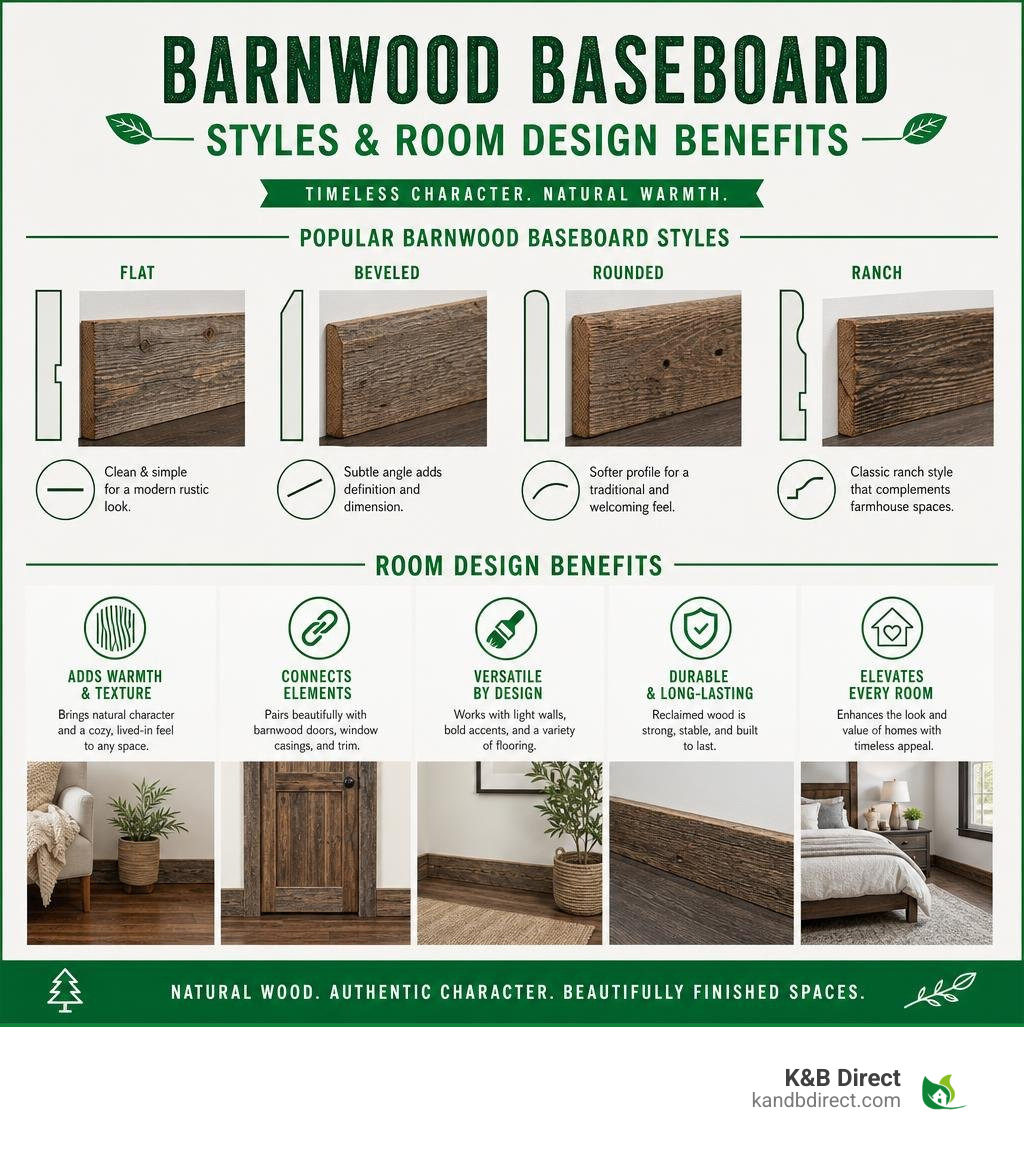
Barnwood baseboard trim basics:
Sourcing, Milling, and Preparing Reclaimed Wood
Locating premium vintage timber requires evaluating grain tightness, species characteristics, and past environmental exposure. Authentic salvaged lumber carries historic weathering patterns and dense old-growth rings that standard retail lumber suppliers simply cannot supply.
Sourcing and Selecting Quality Barnwood Baseboard Trim
Authentic structural lumber can be gathered from vintage agricultural outbuildings, retired manufacturing plants, and high-elevation snow fencing. Homeowners often gather creative interior inspiration by exploring curated concepts like Discover 10 Barnwood Trim and barn wood ideas when designing residential interiors.
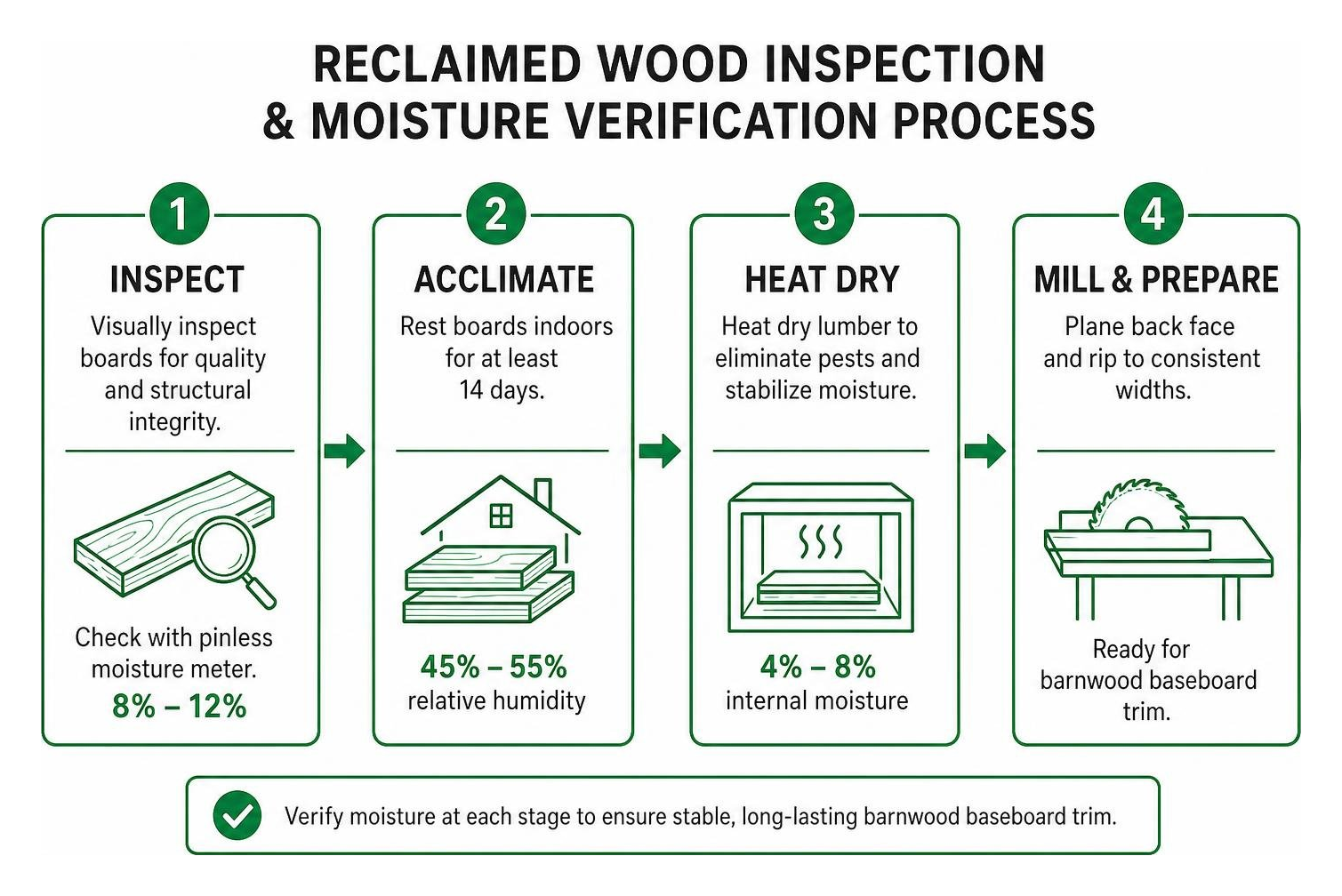
When evaluating salvaged boards, test the lumber using a pinless moisture meter to ensure internal moisture measures between 8% and 12%, providing the necessary structural stability for interior architectural mouldings. Choosing premium wood trim with verified structural integrity prevents seasonal movement, cupping, and gaps along interior wall perimeters. Additionally, inspect older boards with a reliable chemical swab test to confirm the timber contains no vintage lead paints or chemical preservatives from past agricultural treatments.
Acclimation, Milling, and Insect Prevention
Careful material preparation protects indoor environments from hidden pests and dimensional shifting. Acclimation involves storing the lumber inside a climate-controlled room for fourteen days or longer at 45% to 55% relative humidity before trimming or mounting. Heat-treating the lumber in specialized kilns brings core moisture to safe thresholds, eliminates dormant insects, and preserves overall board straightness.
To prepare the timber for interior mounting:
- Pass the back surface of each board across a jointer to create a flat mounting surface while keeping the authentic rough-sawn front face untouched.
- Scan every board using a high-sensitivity metal detector to locate vintage nails or metal fragments before cutting.
- Rip boards to uniform dimensions with an 80-tooth carbide blade on a table saw to create crisp, splinter-resistant top and bottom edges.
- Lightly brush the exterior face with a nylon-bristle wheel to remove loose dirt and loose fibers without compromising the aged silver or brown patina.
- Apply a stabilizing sealer to cut end grains to prevent rapid moisture absorption during seasonal humidity swings.
| Characteristic | Reclaimed Vintage Lumber | Standard New Lumber |
|---|---|---|
| Average Age | 50 to 200+ years | 15 to 30 years |
| Material Density | 28 to 48 lbs/cu. | 22 to 32 lbs/cu. |
| Dimensional Movement | ~30% less movement | Standard expansion |
| Surface Texture | Natural saw marks and weathering | Smooth planed or synthetic |
| Moisture Content (Target) | 8% to 12% interior target | 12% to 19% standard |
Designing Your Interior with Barnwood Baseboard Trim Styles
Salvaged baseboards anchor a living space with architectural presence, establishing handsome contrast against crisp drywall, textured plaster, and modern millwork accents.
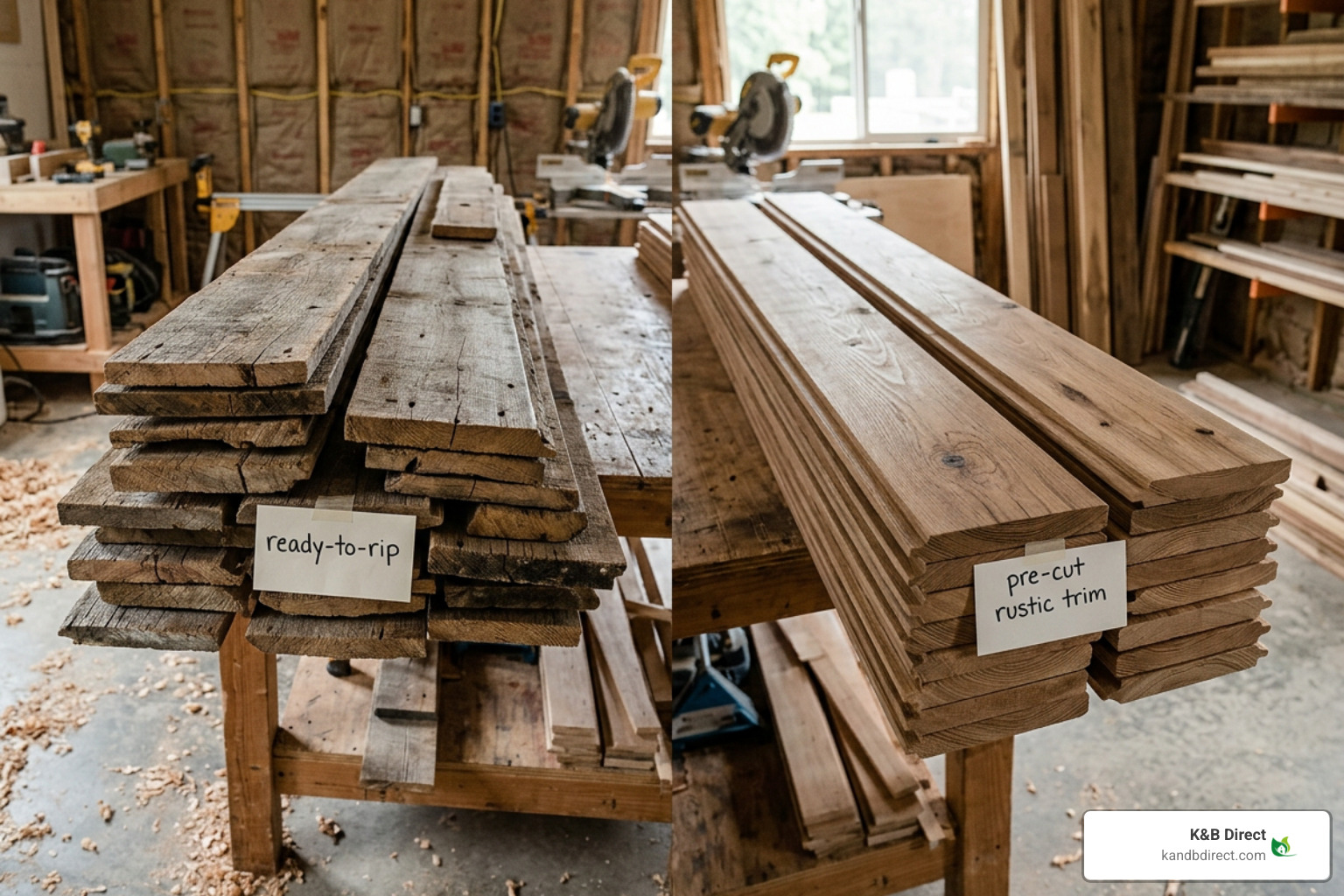
Ready-to-Install vs. Ready-to-Rip Barnwood Baseboard Trim
Selecting the right material format depends on your room dimensions and preferred carpentry workflow. Discover versatile layout strategies in The Best Ways to Style Your Home with Barnwood Trim.
- Ready-to-Install Boards: Pre-milled to standardized 3-inch, 5-inch, or 7-inch heights with consistent lengths. These boards feature straight factory-milled edges that mount securely to flat walls with minimal adjustment.
- Ready-to-Rip Boards: Shipped with three naturally weathered edges and an unfinished edge, allowing carpenters to cut tailored heights on a table saw to follow uneven historic flooring or sloping surfaces.
Pairing Trim with Flooring, Doors, and Wall Paneling
Vintage baseboards look balanced when paired with light neutral wall paint such as warm alabaster, pale greige, or soft linen. Combining deep brown or aged gray perimeter trim with Molding Supplier / Wainscoting Wall Paneling creates clean vertical proportion in dining rooms and entryways.
Anchor your overall interior layout using sturdy baseboard trim that complements interior door casings, window headers, and built-in cabinetry elements throughout the residence. When transitioning between wide plank hardwood flooring, matte porcelain tiles, or polished concrete, select a complementary shoe moulding cut from matching reclaimed stock to bridge irregular floor lines cleanly.
Installation and Joinery Techniques for Flawless Fits
Installing antique lumber requires specialized carpentry methods to handle irregular contours while keeping joints tight and secure.
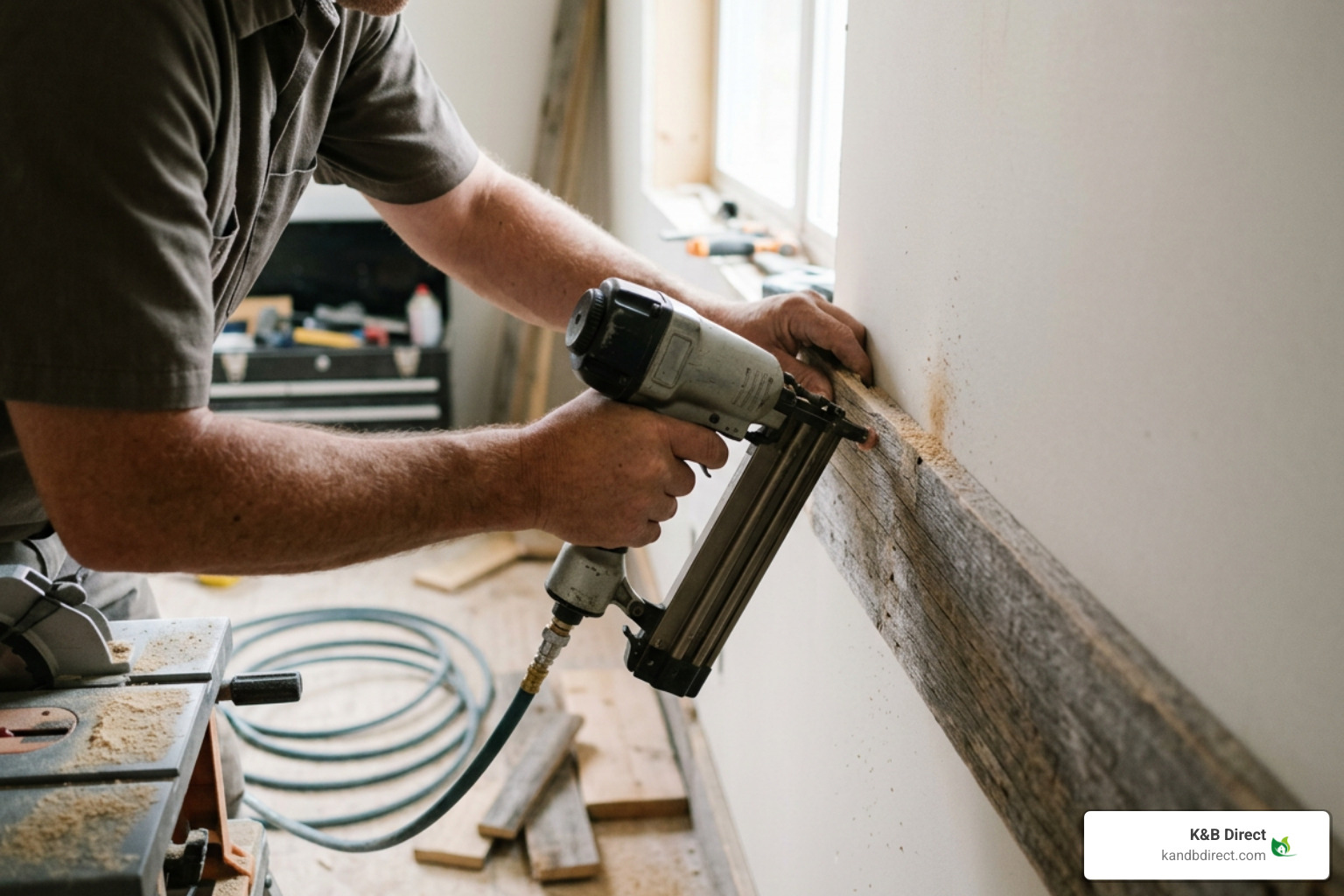
Fastener Selection, Miters, and Expansion Gaps
For reliable fastening and clean corners:
- Apply heavy-duty construction adhesive in a continuous serpentine bead along the smoothed rear face of the lumber.
- Secure the trim to wall studs using an 18-gauge brad tool for softer pine or a 15-gauge finish fastener for dense antique oak.
- Join long runs using 45-degree scarf joints rather than butt joints to conceal natural wood movement over time.
- Fasten corner transitions with biscuit joinery or tight miter cuts to prevent corner separation.
- Leave a continuous 1/16-inch perimeter gap at end terminations to accommodate slight seasonal wood movement.
Take time to test corner angles with an angle finder before cutting, as antique drywall and plaster corners rarely form exact 90-degree angles.
Calculating Linear Board Lengths and Waste Allowances
Measure the perimeter of each room with a precision tape measure, subtracting doorway openings. Always add a 10% allowance to your total linear measurement calculation to accommodate 45-degree miter cuts, scarf overlap joints, and natural wood grain variations.
Careful planning ensures consistent board thickness across long continuous wall runs, producing seamless corners, smooth transitions, and dependable stability.
Protective Finishes and Moisture Considerations
Sealing antique lumber protects the aged exterior grain while maintaining its historic visual appeal.
Preserving Natural Patina with Oils and Sealants
Using heavy gloss stains can obscure the aged character of vintage boards. Instead, apply light penetrating Danish oil or an ultra-matte water-based polyurethane over an initial coat of clear sanding sealer. This technique protects the silver-gray or amber tones without creating artificial plastic shine across your wood moulding. Ultra-matte finishes maintain the raw, organic aesthetic of weathered timber while creating an invisible barrier against dust, scuffs, and household cleaning solutions.
Managing Humidity in Kitchens and Bathrooms
Bathrooms and laundry rooms require extra moisture protection:
- Coat all four sides—including top edges, bottom edges, and cut ends—with an invisible penetrating sealer.
- Maintain a 1/8-inch expansion gap between the bottom edge of the board and hard tile floors, then seal that joint with translucent silicone.
- Ensure room ventilation fans run during and after showers to keep indoor humidity within normal ranges.
- Find additional moisture-management strategies in our resource on Moisture-Proofing Your Floors: The Ultimate Guide to Waterproof Trim.
Frequently Asked Questions About Rustic Baseboard Trim
What environmental certifications should you look for when buying reclaimed wood trim?
Look for FSC Recycled certification, which verifies that the timber is reclaimed rather than newly harvested. Choose products certified with GREENGUARD Gold to confirm low chemical emissions and maintain clean indoor air quality.
Reclaimed Barnwood Comparison Against New Lumber Durability and Value
Aged timber harvested from historic structures offers tighter growth rings and high natural density, delivering superior resistance to warping and seasonal cupping. Because these old-growth boards have cured naturally for decades, they withstand everyday household wear with outstanding durability and long-term aesthetic appeal.
Can warped or uneven barnwood boards be corrected for baseboard installation?
Yes. Slight cupping can be flattened by planing the rear face flat on a jointer. Making shallow relief cuts along the back of stiff boards allows them to conform to uneven drywall when secured with construction adhesive and finish fasteners.
Conclusion
Aged architectural baseboards bring natural texture, historic character, and warmth to modern homes. Whether you choose pre-cut boards or customize each piece on-site, pairing weathered wood with neutral walls creates a balanced, welcoming atmosphere.
When planning your upcoming home renovation, explore our extensive collection of shop quality baseboards to find the ideal moulding profiles and finishes for every room in your home.