
Why Composite Baseboard Trim Is Replacing Traditional Wood in Modern Homes
Composite baseboard trim is a manufactured interior finishing material made from a blend of wood fibers, plastic resins, and mineral binders — engineered to outperform traditional wood, MDF, and standard plastic trim in moisture resistance, durability, and long-term maintenance.
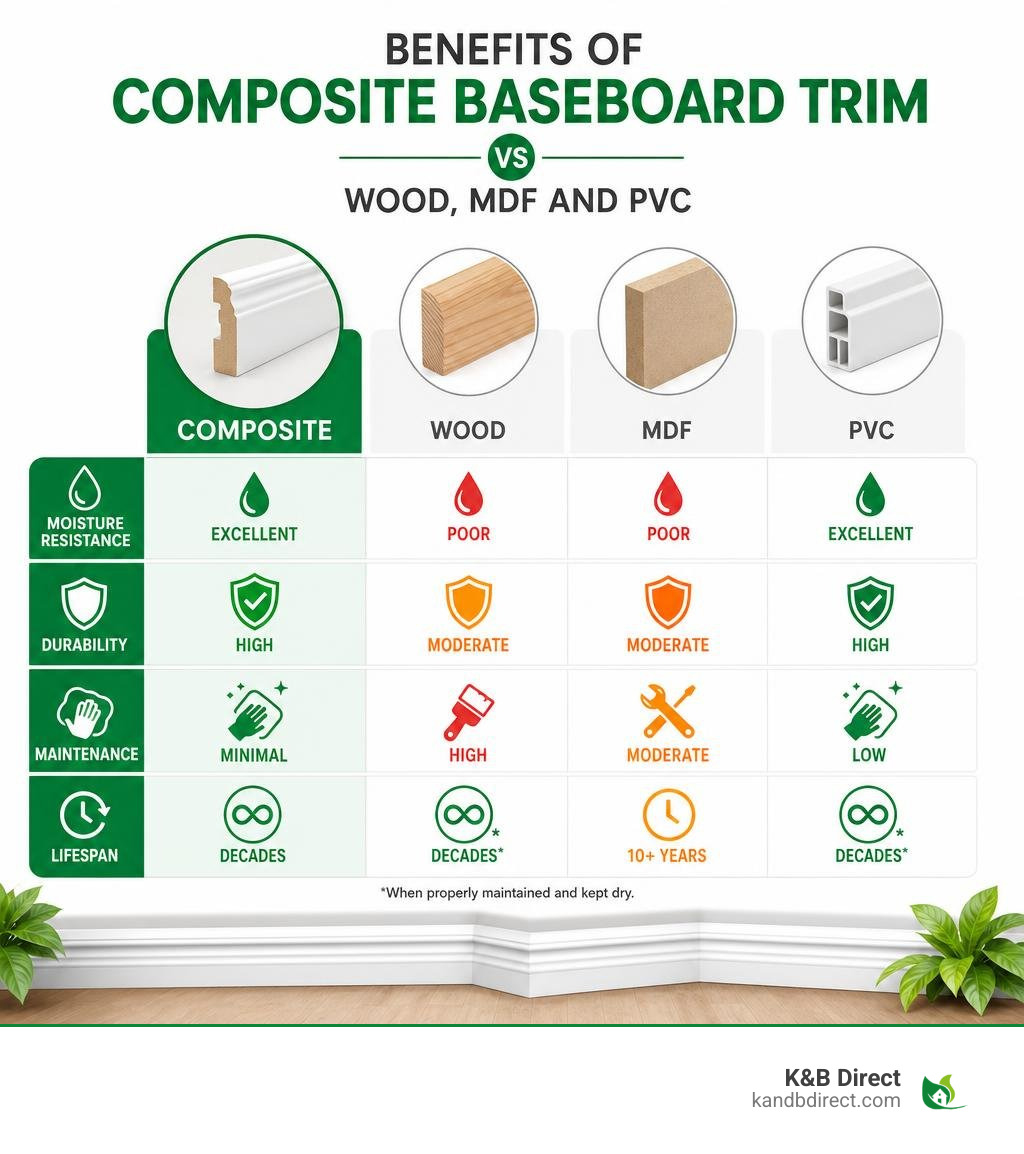
Here’s a quick overview of what makes it stand out:
| Feature | Composite Trim | Wood Trim | MDF Trim | PVC Trim |
|---|---|---|---|---|
| Moisture resistance | Excellent | Poor | Poor | Excellent |
| Pest resistance | Yes | No | No | Yes |
| Maintenance required | Minimal | High | Moderate | Low |
| Paint ready | Yes | Yes | Yes | Yes |
| Typical lifespan | Decades | Decades* | 10+ years | Decades* |
*When properly maintained and kept dry.
Not long ago, choosing baseboards meant picking between pine, hemlock, or MDF. Today, composite materials have changed the game — especially for bathrooms, basements, and any room where moisture and wear are a daily reality.
I’m Eryk Piatkowski, owner of K&B Direct, and after more than a decade helping homeowners renovate kitchens and bathrooms, I’ve seen how switching to composite baseboard trim eliminates the warping, rot, and repainting headaches that come with wood alternatives. In this guide, I’ll walk you through everything you need to choose the right trim for your space.
Simple guide to composite baseboard trim:
Understanding Composite Baseboard Trim Materials and Options
When homeowners search for architectural trim, the term “composite” can refer to a few distinct engineered formulations. According to the standard COMPOSITE Definition & Meaning, a composite is something made up of distinct parts or elements combined to create superior physical qualities. In interior architecture, composite baseboard trim combines refined wood fibers, plastic polymers, or mineral compounds to create a material that captures the aesthetic warmth of natural timber without its inherent vulnerabilities.
Unlike solid lumber, which swells when exposed to humidity, or standard Medium Density Fiberboard (MDF), which acts like a sponge when water touches its edges, engineered composite profiles remain dimensionally stable. Manufacturing companies utilize extrusion molding techniques to force heated raw compounds through custom dies, yielding uniform profiles across extreme length runs. For a deeper understanding of standard profiles and sizing options, check out our comprehensive Baseboard Moulding Guide.
Wood-Plastic and Mineral-Based Composite Baseboard Trim
Engineered baseboards generally fall into two primary technology categories: Wood-Plastic Composites (WPC) and Mineral-Based Composites (MBC).
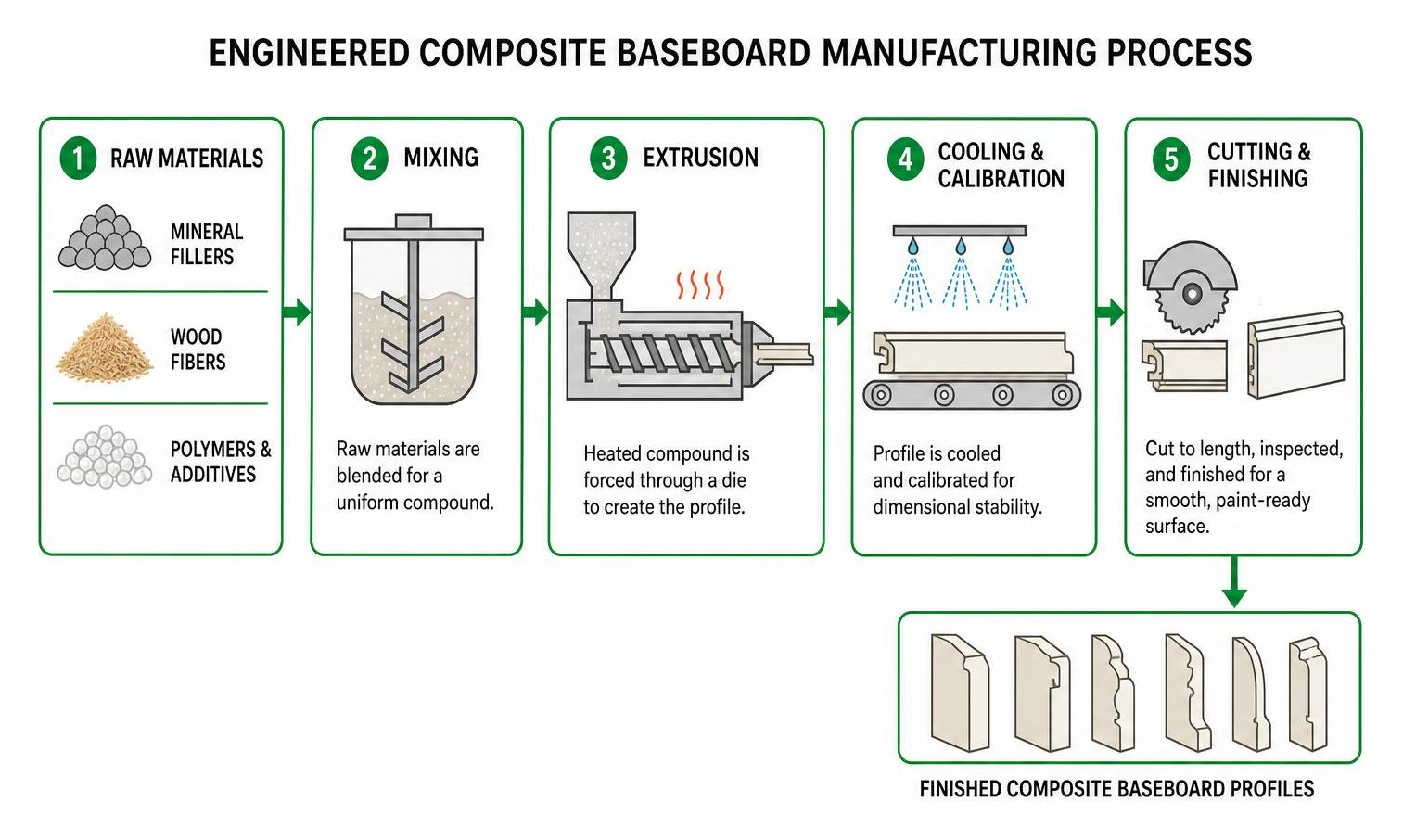
- Wood-Plastic Composites (WPC): These boards fuse reclaimed saw-flour or wood particles with thermoplastics such as polyethylene or polypropylene alongside bonding agents. The timber fibers provide internal structural strength and natural density, while the surrounding resin seals off cellular moisture channels.
- Mineral-Based Composites (MBC): Next-generation formulations replace wood fillers entirely with crushed minerals, such as limestone, bound within advanced polymers. Materials engineered with specialized mineral binders, like Surestone technology seen in specialized Arris™ | Mineral-Based Composite Trim , eliminate thermal movement issues. Because mineral cores contain zero organic timber flour, they exhibit virtually no expansion or contraction during Chicago seasonal temperature shifts.
Whether installing simple flat profiles or intricate decorative profiles, choosing engineered formulations ensures straight runs that do not bow or twist prior to installation. To explore top-tier options, explore our review of The Best Composite Trim Boards for a Maintenance-Free Finish.
Environmental Impact and Recycled Materials in Composite Baseboard Trim
Sustainability is a major advantage of modern composite manufacturing. Millions of tons of post-industrial wood scrap and post-consumer plastics that would otherwise head to regional landfills are redirected into architectural moulding.
Many leading composite lines utilize impressive quantities of recycled components. For instance, advanced polyurethane and mineral composite siding materials like Shadow Line+ Ashwood – EN-US – Residential and Board & Batten+ Ashwood – EN-US – Residential incorporate up to 38% recycled content, including reclaimed limestone. By binding these repurposed minerals into durable polymer resins, manufacturers craft ultra-durable architectural products that reduce reliance on virgin timber logging.
Comparing Interior Moulding Materials for Long-Term Durability
Selecting baseboards requires balancing longevity, physical resilience, and aesthetic performance against long-term maintenance needs. Natural wood offers rich grain patterns, but solid hardwoods require ongoing sealing, while softwoods like pine split easily during installation. MDF remains popular for dry areas, but a single plumbing overflow can cause permanent edge swelling and core destruction. Plastic options like solid PVC provide complete waterproofing, yet some cellular PVC profiles expand noticeably when room temperatures rise.
Composite baseboard trim strikes an ideal middle ground. It delivers the solid feel and clean edges of real timber while providing synthetic defense against humidity and physical scuffs.
| Material | Primary Ingredients | Water Resistance | Pest Resistance | Resistance to Splitting | Recommended Finish |
|---|---|---|---|---|---|
| Composite Trim | Polymer resins + wood fibers / minerals | High to Superior | Complete | Very High | Factory Capstock or Acrylic Paint |
| Solid Wood | Pine, Poplar, Oak, Hemlock | Low to Moderate | Low | Moderate | Stain, Clear Coat, or Paint |
| MDF | Compressed wood pulp & glue | Low (Swells easily) | Low | High (Soft core) | Primed & Painted |
| PVC Plastic | Extruded cellular vinyl | 100% Waterproof | Complete | High | White Capstock or Acrylic Paint |
For a complete breakdown of profile categories across all room types, read through The Ultimate Guide to Molding and Baseboards.
Performance Against Moisture, Pests, and Impact
The key advantage of composite construction lies in its chemical resistance to everyday household damage:
- Moisture & Mold Resistance: Because binding resins completely encapsulate the internal mineral or cellulose particles, humidity cannot penetrate the surface. Water splashes slide right off, preventing rot, mildew formation, and backing delamination.
- Insect Immunity: Termites, carpenter ants, and wood-boring beetles rely on natural cellulose fibers for sustenance. In composite materials, synthetic resins neutralize this food source, rendering the boards entirely unattractive to pests.
- High-Impact Durability: Daily life brings vacuum cleaner bumps, moving furniture, toy collisions, and pet activity. Soft pine and hollow MDF dent or crumble under impact. The dense matrix of mineral polymer composites resists physical gouging, preserving crisp profile corners for decades.
Learn additional details on protecting ground-level transition zones in our article Moisture Proofing Your Floors: The Ultimate Guide to Waterproof Trim.
Lifespan and Warranty Standards
Because engineered trims do not decay or absorb ambient humidity, their operational lifespan far outmatches standard indoor trim options. Standard MDF mouldings often require touch-ups or replacement within 10 years if subject to floor washing or minor spills. In contrast, premium composite trim boards comfortably last for decades without showing structural degradation.
Manufacturers back this stability with substantial warranty coverage. Architectural products like prefinished woodgrain composite trim, such as the 5/4 in. x 4 in. x 16 ft. White Woodgrain Composite Prefinished Trim Board (2-Pack) , carry 30-year limited finish guarantees against fading or peeling. Similarly, mineral-based lines and synthetic cellular profiles, like Trimboard Trim | AZEK Exteriors , come backed by lifetime limited residential warranties covering warping, cupping, and material corrosion.
Ideal High-Moisture and High-Traffic Room Applications

While composite baseboard trim enhances any room in the home, its unique physical properties make it irreplaceable in demanding interior spaces. Selecting waterproof trim materials for ground-level zones prevents structural rot beneath wallboard.
To evaluate vinyl and cellular choices alongside composites, consult our selector guide No More Rot: How to Choose and Buy PVC Baseboard Trim.
Bathrooms, Basements, and Laundry Areas
High-humidity interior zones create continuous moisture challenges for standard trim materials:
- Bathrooms: Steam from daily showers condenses onto lower walls, pooling along the floor line. Solid wood absorbs this moisture, causing finish paint to blister and peel. Composite baseboards remain unchanged despite constant humidity changes.
- Basements: Below-grade concrete floors naturally wick subterranean dampness upward. Installing MDF against basement perimeter walls often results in mold spores hiding within swelling lower trim. Mineral and polymer composite profiles provide permanent protection against damp concrete.
- Laundry Facilities: Washing machine vibration, occasional hose drips, and wet laundry baskets present constant splash threats. Composite boards absorb zero liquid, protecting lower wall framing from unseen moisture accumulation.
Coastal Homes and High-Traffic Living Spaces
For properties situated along open shorelines or busy suburban residential corridors around Des Plaines and Glenview, environmental factors place extra stress on home trim.
Coastal air laden with airborne moisture accelerates decay in standard wooden millwork. Synthetic composite trim profiles remain unaffected by moisture variations or salt exposure. Furthermore, in busy hallways, mudrooms, and entryways where foot traffic is non-stop, composite trim provides high dent resistance against boots, sports gear, and pets.
Design Styles, Color Finishes, and Painting Best Practices
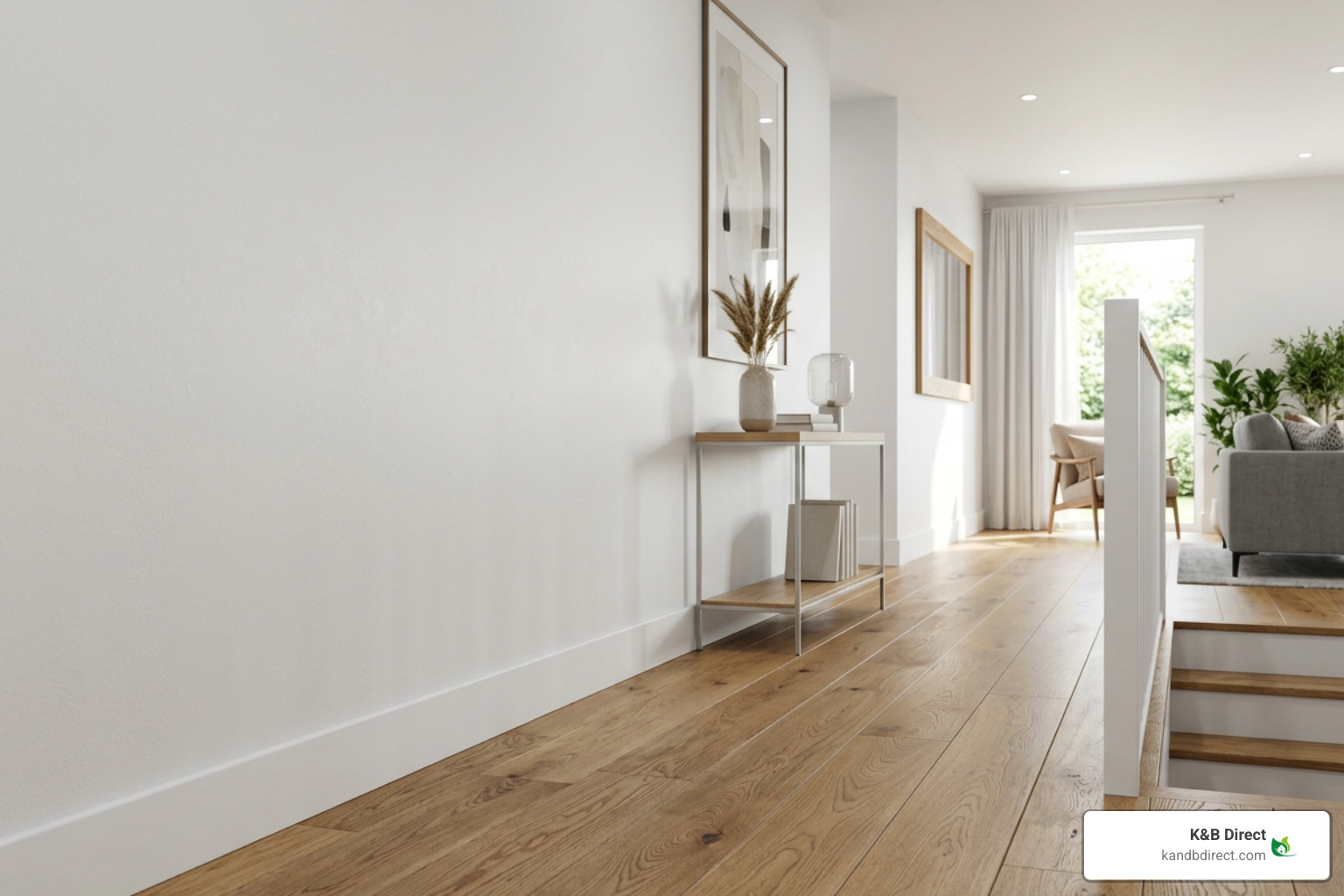
Interior design trends have evolved beyond basic white Quarter-Round options. Modern homeowners demand clean geometric lines, tall vertical visual anchors, and custom color integration that matches contemporary cabinetry and door casings.
Profiles, Textures, and Aesthetics
Engineered trims are extruded into virtually every classic and modern profile profile imaginable, as detailed in industry resources like Composite Baseboard Trim & Trim Boards | Durable and … . Available surface aesthetic variations include:
- Smooth Matte Finish: Delivers a sleek, clean, modern look that suits transitional and contemporary architectural designs without showing visible wood grain.
- Embossed Woodgrain Texture: Captures the subtle tactile feel of freshly milled cedar or oak timber, perfect for rustic, craftsman, or modern farmhouse interiors.
- Modern Flat Baseboard Profiles: Simplified 4-inch to 7-inch flat boards create sharp, minimalist wall transitions. To see why flat profiles are dominating contemporary interior architecture, read Why 4 Inch Flat Baseboards Are the Unsung Heroes of Modern Design.
Painting Guidelines and Finish Protection
A common question among homeowners is whether non-wood composite trim requires special coating procedures. Most composite mouldings arrive factory pre-primed in bright white capstock, ready for immediate installation.
If you choose to paint your trim to match custom interior palettes, follow these industry guidelines:
- Paint Selection: Always apply high-grade 100% acrylic latex interior paint. Acrylic paints remain flexible after curing, allowing them to expand and contract smoothly alongside synthetic resins without cracking.
- Light Reflectance Value (LRV): When painting cellular or polymer-based synthetic trim, select paint shades with an LRV rating of 55 or higher (where 0 is pure black and 100 is pure white). Dark paint shades absorb heat, which can lead to thermal warping in high-sunlight rooms.
- Staining Restrictions: Because non-porous composite matrices lack open wood pores, liquid stains cannot penetrate the core. If you desire natural wood hues, choose factory-prefinished composite boards featuring realistic printed woodgrain coatings.
Baseboard Trim Fastening and Sealing Guidelines
Installing composite baseboard trim utilizes standard woodworking equipment, making the process straightforward for experienced trade professionals and installation teams.
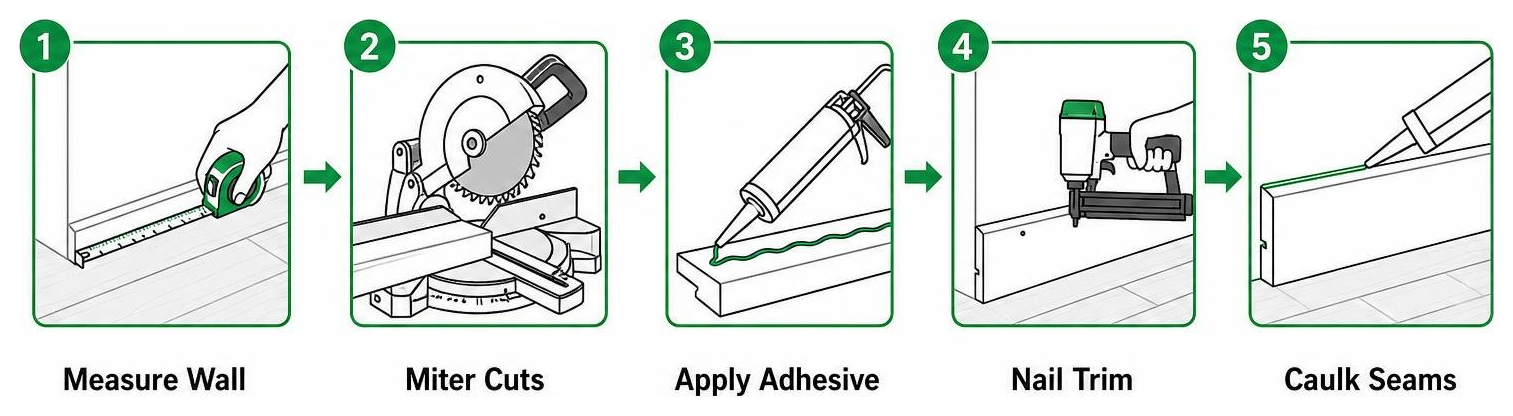
Follow these installation practices for clean, durable joints:
- Cutting and Miter Preparation: Utilize a sharp 80-tooth carbide-tipped miter saw blade for ultra-clean cuts without frayed edges. When joining corner intersections, follow expert angle techniques outlined in How to Cut Baseboard Corners.
- Mechanical Fastening: Secure trim boards to wall studs using 15-gauge or 18-gauge stainless steel or galvanized pneumatic finish nails. Sink nail heads slightly beneath the board surface using an automatic driver or nail set.
- Adhesive Integration: Combine mechanical fasteners with continuous beads of heavy-duty polyurethane construction adhesive applied along the back of the trim board. This dual-attachment method prevents board movement over long wall spans.
- Seamless Joint Caulk: Seal upper wall seams, mitered corner joints, and nail set indentations using high-flexibility waterproof acrylic latex sealant. Smooth joint lines with a damp sponge before paint touch-ups.
Frequently Asked Questions About Baseboard Moulding
Can composite trim boards be painted or stained?
Yes, composite trim boards can easily be painted using standard 100% acrylic latex paint. Most engineered composite trim comes factory-primed or capped with a smooth white surface layer that requires zero specialized primers. However, composite trim cannot be stained using standard wood stains because the synthetic resin surface is non-porous and will not absorb liquid stains. For a stained wood appearance, select factory-prefinished composite boards engineered with built-in woodgrain finishes.
Which areas benefit most from synthetic baseboards?
Synthetic composite baseboards perform best in rooms exposed to high humidity, moisture splashes, or heavy foot traffic. Ideal residential installation areas include bathrooms, basements, laundry rooms, mudrooms, kitchens, and ground-floor entryways. Additionally, commercial hallways and coastal properties benefit immensely from synthetic trim due to its rot immunity and high impact resistance.
What tools are required to install synthetic trim?
Installing synthetic composite trim requires standard woodworking equipment:
- Miter saw equipped with a fine-finish carbide-tipped blade (60 to 80 teeth)
- Pneumatic brad nailer or finish nailer with galvanized or stainless steel finish nails
- Measuring tape and carpenter pencil
- Heavy-duty construction adhesive or polyurethane panel adhesive
- Waterproof acrylic latex caulk and caulking gun
- Flexible putty knife and fine-grit sanding block for hole filling
Conclusion
Selecting interior mouldings is one of the final steps in defining your home’s architectural character. While traditional wood moulding served past generations well, modern composite baseboard trim delivers superior moisture protection, pest immunity, and low-maintenance durability that busy households require today.
By choosing engineered composite mouldings for your next remodeling project, you eliminate worry over warping, rotting, or frequent repainting. At K&B Direct, we stock high-grade cabinetry, doors, windows, and architectural moulding options designed to bring your dream aesthetic to life while protecting your budget.
Visit our showroom or browse our complete collection of Baseboard Mouldings and Options to find the ideal finish for your home today!