
Buy Base Molding That Fits Your Room and Plan
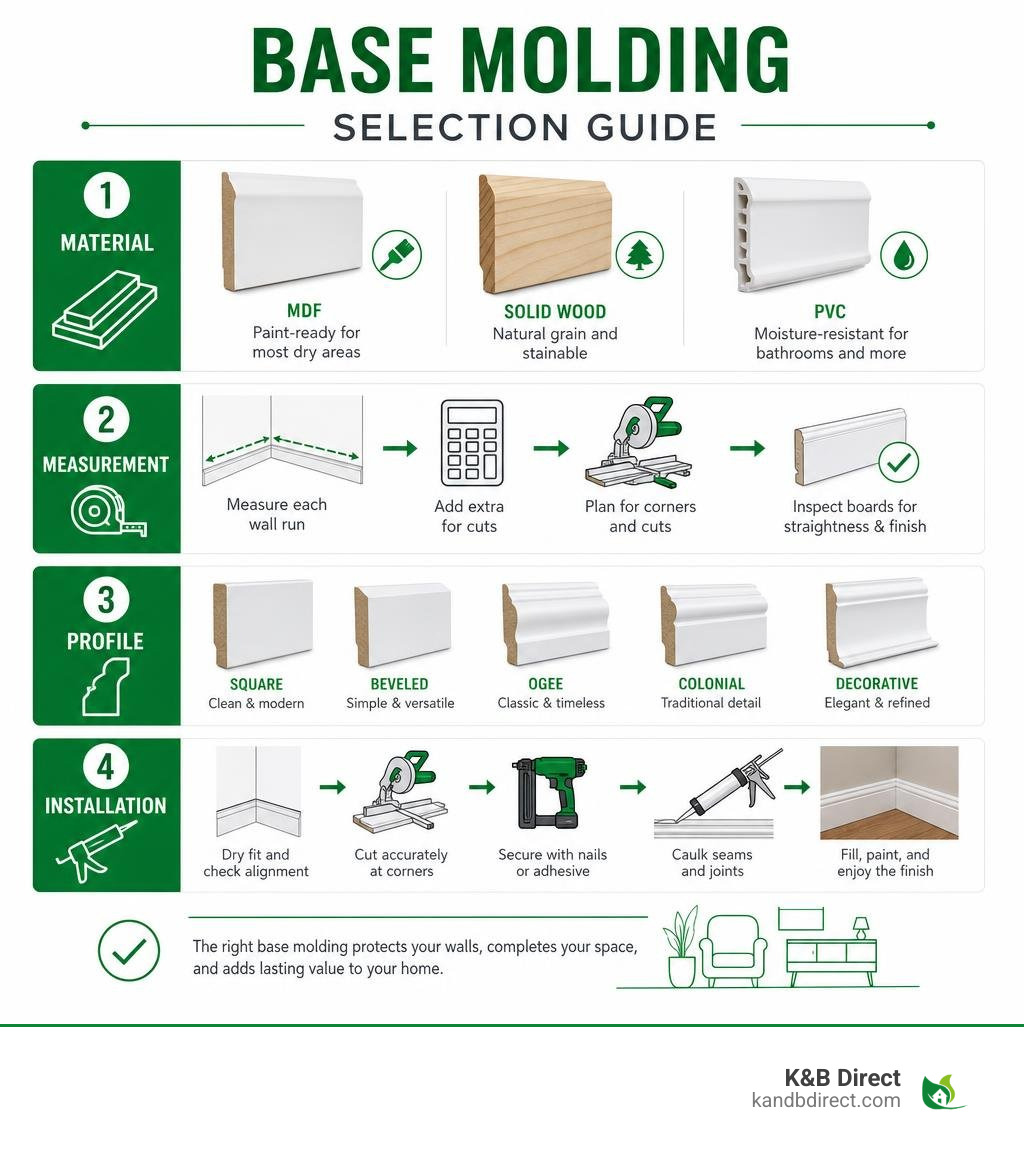
To buy base molding with confidence, match the material and profile to the room first. Choose paint-ready MDF for most dry interior spaces, solid wood when you want natural grain or stain, and PVC in moisture-prone areas. Then measure each wall run, add extra material for cuts, and inspect boards for straightness and a consistent finish.
Base molding covers the joint between the wall and floor, protects lower walls from scuffs, and gives flooring transitions a clean, finished edge. The right trim can also make a kitchen, bathroom, door, or window renovation feel more complete.
I am Eryk Piatkowski, Owner at K&B Direct, where we have helped homeowners create quality spaces since 2011. My experience guiding cabinet and renovation selections helps customers buy base molding that supports their room’s style, function, and finish.
Basic buy base molding terms:
Material and Profile Guide to Buy Base Molding for Your Home
Choosing the ideal architectural trim requires balancing longevity, room environment, and design preferences. Industry research shows that the global architectural trim market continues to expand steadily at an annual rate of about 4.5% through 2030, driven by the desire for refined living spaces.
Exploring the ultimate guide to molding and baseboards reveals that every home layout benefits from selecting specific materials matched to moisture exposure and traffic levels.
| Trim Material | Moisture Resilience | Impact Durability | Best Finish Application | Installation Level |
|---|---|---|---|---|
| MDF (Medium Density Fiberboard) | Low to Moderate | Moderate | Paint Only (Smooth) | Straightforward |
| Solid Pine / Poplar | Moderate | High | Paint or Light Stain | Intermediate |
| Solid Hardwood (Oak / Maple) | Moderate to High | Exceptional | Stain or Clear Coat | Advanced |
| Cellular PVC | Complete (100% Waterproof) | High | Paint or Raw White | Straightforward |
Baseboard Materials Compared: MDF, Solid Wood, and PVC
MDF accounts for over 40% of residential trim applications because it delivers a smooth and uniform surface at an accessible investment level. Nearly 60% of property owners opt for pre-primed selections to streamline their painting projects. MDF excels in dry environments such as bedrooms, dining rooms, and formal living areas where temperature and humidity stay consistent.
Solid wood represents the gold standard for authentic character and premium strength. When choosing natural lumber, a detailed wood cap moulding guide helps navigate varieties like clear pine, poplar, and red oak. Solid timber withstands heavy vacuum bumps and pet activity while providing the unique capability to accept rich wood stains that showcase natural grain patterns.
For wet locations such as full bathrooms, laundry areas, mudrooms, and basements, moisture protection is critical. Reviewing a PVC base cap moulding guide highlights the way cellular vinyl options completely resist rot, swelling, and moisture damage. PVC cuts cleanly with standard woodworking blades and provides lasting performance against standing water and spills.
Standard Sizes and Profiles: From Modern to Vintage Designs

Scale and proportion determine the way finished trim harmonizes with room volume:
- Standard 96-Inch (Eight-Elevation) Ceilings: Profiles ranging between 3-1/4 inches and 4-1/2 inches maintain visual balance without overwhelming wall space.
- 108-Inch to 120-Inch Ceilings: Heights between 5-1/4 inches and 7 inches provide proper substance and elegance.
- Cathedral or 144-Inch+ Ceilings: Tall profiles exceeding 7 inches create a grand architectural foundation.
Profile aesthetics should align with your interior theme:
- Contemporary Interiors: Clean lines and rectilinear profiles, such as modern base moulding, feature flat faces and crisp 90-degree edges that complement minimalist cabinetry and sleek hardware.
- Traditional & Historic Homes: Intricate curves and tiered top details found in vintage base cap moulding bring classical character to older residences.
- Tiered Multi-Piece Assemblies: For elevated grandeur, combining a base plate, a decorative upper accent, and a bottom shoe molding forms a rich 3-piece baseboard assembly. Simpler rooms can also achieve subtle depth using a streamlined 2-piece base molding setup or versatile baseboard cap profiles.
Measuring, Planning, and Sourcing Base Trim
Careful planning ensures smooth installation progress and eliminates unnecessary delays during assembly.
Accurately Calculating Linear Measurement Before You Buy Base Molding
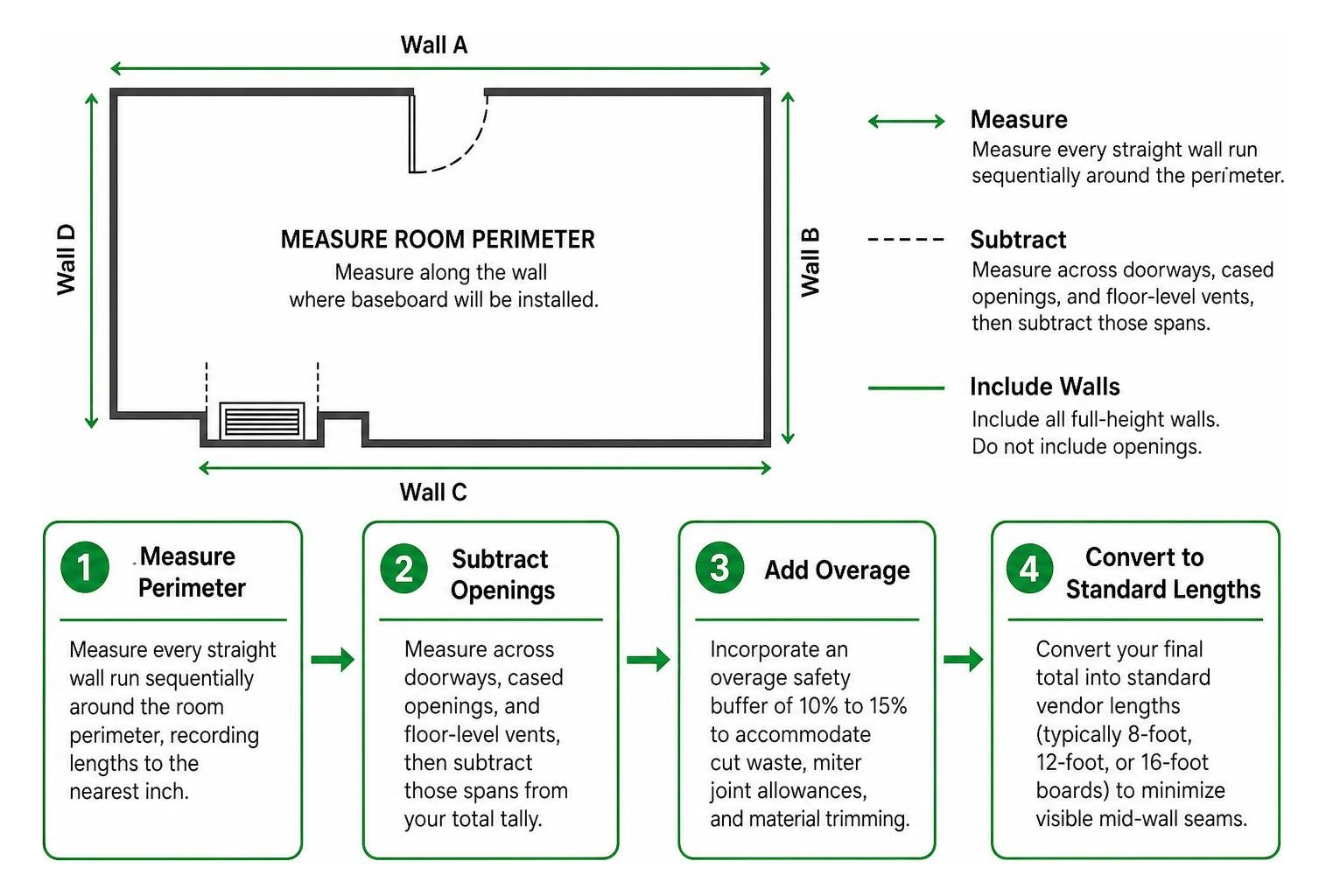
- Measure every straight wall run sequentially around the room perimeter, recording lengths to the nearest inch.
- Measure across doorways, cased openings, and floor-level vents, then subtract those spans from your total tally.
- Incorporate an overage safety buffer of 10% to 15% to accommodate cut waste, miter joint allowances, and material trimming.
- Convert your final total into standard vendor lengths (typically 96-inch, 144-inch, or 192-inch board stock) to minimize visible mid-wall seams on long expanses.
Where to Buy Base Molding: Local Suppliers vs Online Trim Retailers
Online supply sources have expanded by roughly 25% annually as digital ordering options improve. However, partnering with an established local molding supplier offers distinct advantages. Visiting a dedicated regional showroom allows you to inspect lumber straightness, verify surface smoothness, and confirm profile dimensions before final delivery.
Discerning homeowners across Chicagolandincluding Schiller Park, Rosemont, Des Plaines, Elk Grove Village, Park Ridge, Schaumburg, and Oak Brookregularly browse local supplier reviews on Yelp to find verified regional stockists delivering superior finish quality.
When inspecting inventory in person:
- Look down the edge of long boards to spot bowing, cupping, or twisting.
- Check pre-primed faces for uniform coverage without runs or rough grain telegraphing.
- Confirm that tongue, groove, or cap profile dimensions match precisely across bundled packs.
Homeowner vs Professional Installation: Tools, Cutting, and Expenses
Undertaking a self-managed trim upgrade can produce rewarding results, but complex room layouts with multiple angled corners and varying transitions may warrant experienced hands. Reviewing expert guidance on base cap moulding installation helps determine whether personal execution or specialty craftsmanship suits your timeline.
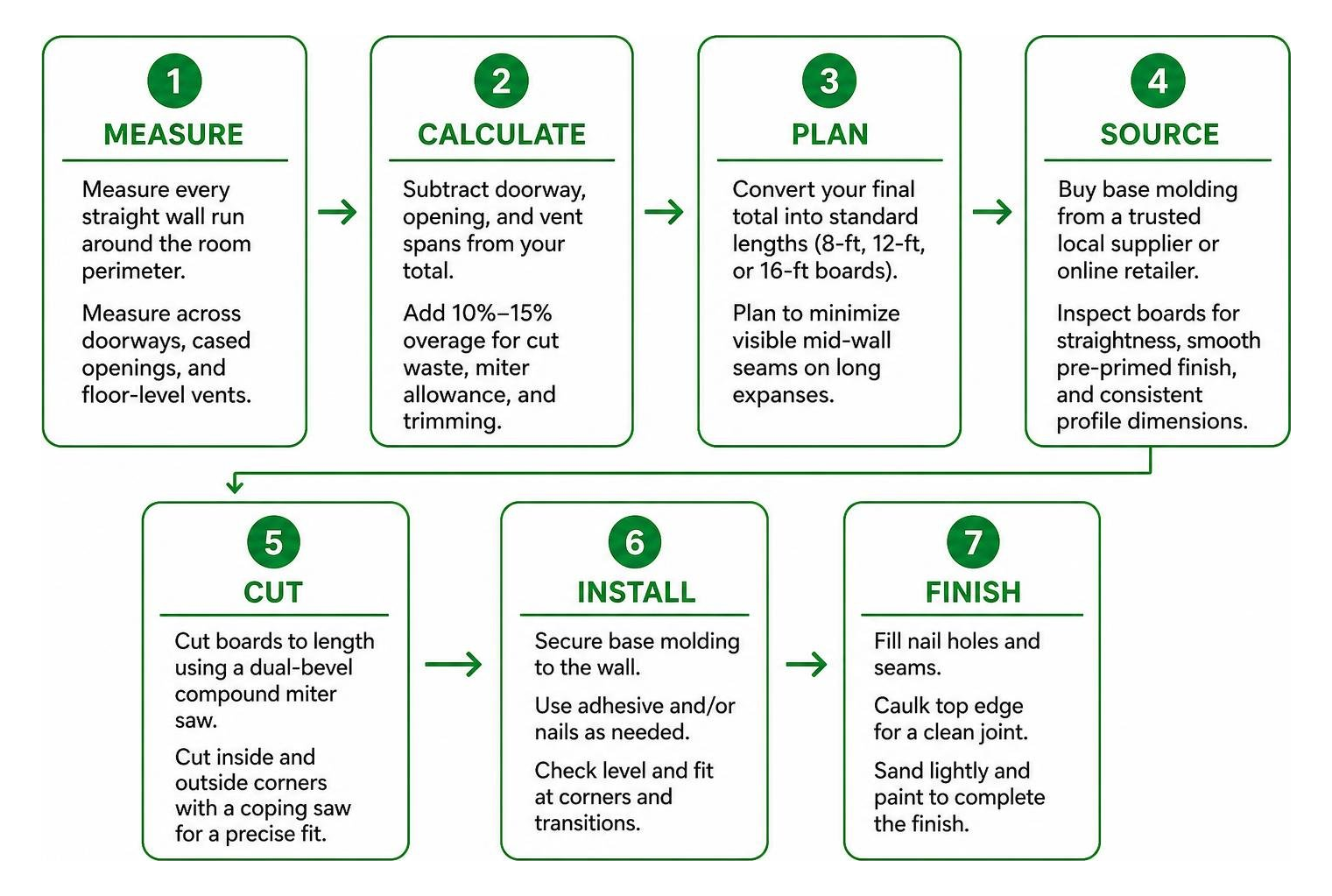
Essential Tools and Techniques for Cutting Inside and Outside Corners
Precise carpentry relies on proper tooling:
- Dual-bevel compound miter saw equipped with a fine-finish 60+ tooth carbide blade
- Coping saw fitted with flexible, high-carbon blades for contoured joints
- Pneumatic or cordless 18-gauge brad nail gun
- High-tack construction adhesive and color-matched acrylic latex sealant
- Scribe tool, tape measure, and angle finder
Inside 90-degree corners create challenges because drywall compound build-up rarely leaves corners at true right angles. Mastering baseboard cutting with a coped joint rather than a basic 45-degree miter produces seamless connections that remain tight even through seasonal humidity changes. Cut the first board flush perpendicularly against the adjacent wall, then back-bevel and cope along the profile contour of the intersecting piece for an interlocking fit.
For long, uninterrupted spans that exceed single board lengths, join pieces using a 45-degree scarf joint over a wall stud rather than a flat butt joint. Glue the overlapping angle and secure both pieces through the stud for an invisible seam.
Wall Preparation, Uneven Floors, and Stair Transitions
Old drywall surfaces often exhibit subtle dips, while subfloors can slope over time. When installing trim over rolling flooring, scribe the bottom edge of the board to follow the floor’s contours before nailing. Adding a flexible base shoe or quarter-round molding along the bottom provides extra flexibility to conceal dips without warping the main baseboard.
Stairways present distinct geometry challenges. Mastering a smooth baseboard stairs trim transition requires matching angles precisely where horizontal baseboards meet descending skirt boards, ensuring continuous sightlines throughout the staircase.
Frequently Asked Questions About Baseboard Trim
What is the typical expenditure per linear measure to buy and install baseboards?
Total investments for materials and professional craftsmanship generally range between $1.50 and $4.00 per linear running unit for standard MDF or primed pine installations. Premium hardwoods, complex custom profiles, and multi-piece installations can increase this investment level depending on room layout complexity.
Managing Uneven Floors and Walls During Baseboard Installation
For uneven floors, locate the lowest spot in the room as your baseline, level your trim run horizontally, and scribe bottom variations using a compass. For bowed drywall studs, apply construction adhesive behind the board and utilize shims to hold a true straight line before securing fasteners into framing.
Why choose pre-primed base molding over unfinished wood stock?
Factory pre-primed stock seals raw fibers, blocks tannin bleed-through, and saves significant preparation hours. It creates an ultra-smooth ground coat ready to receive topcoat paint without demanding multiple rounds of manual priming and sanding.
Conclusion
Choosing the right architectural trim elevates room character, protects walls, and unifies interior design from floor to ceiling. Whether upgrading a single living area or completing an entire residence, choosing durable materials and balanced proportions creates enduring beauty.
We invite you to explore our comprehensive baseboard collection to find the perfect trim profiles, premium materials, and matching accessories for your next home improvement project.