
Why Quality Millwork Makes All the Difference in Your Home
Millwork shops are specialized businesses that create and supply custom or stock wood trim, moldings, doors, and other interior architectural elements for residential and commercial projects. These shops serve as your go-to source for everything from crown molding and baseboards to custom cabinetry and paneling.
Top millwork shops to consider:
- Local custom millwork shops – Best for unique designs and historical replication
- Building supply stores – Good for standard profiles and stock options
- Specialized millwork retailers – Offer both custom and stock with expert guidance
- Online millwork suppliers – Convenient for standard profiles with delivery options
The right millwork can transform an ordinary room into something extraordinary. As one millwork professional puts it: “Architectural millwork is any piece of visible woodwork after construction has been completed – staircases and handrails, molding, paneling, trim, casework, and countertops.” These finishing touches don’t just protect your walls from scuffs and dents – they define your home’s character and style.
Whether you’re looking for simple baseboards or elaborate crown molding, the quality of both the product and the shop you choose will make a lasting impact on your project’s success.
I’m Eryk Piatkowski, owner of K&B Direct, where we’ve been helping homeowners find quality millwork solutions for over ten years. Through working with countless customers on kitchen and bathroom renovations, I’ve learned that choosing the right millwork shops can make or break your project’s final look and budget.
Learn more about millwork shops:
What is Architectural Millwork? A Guide to Products and Styles
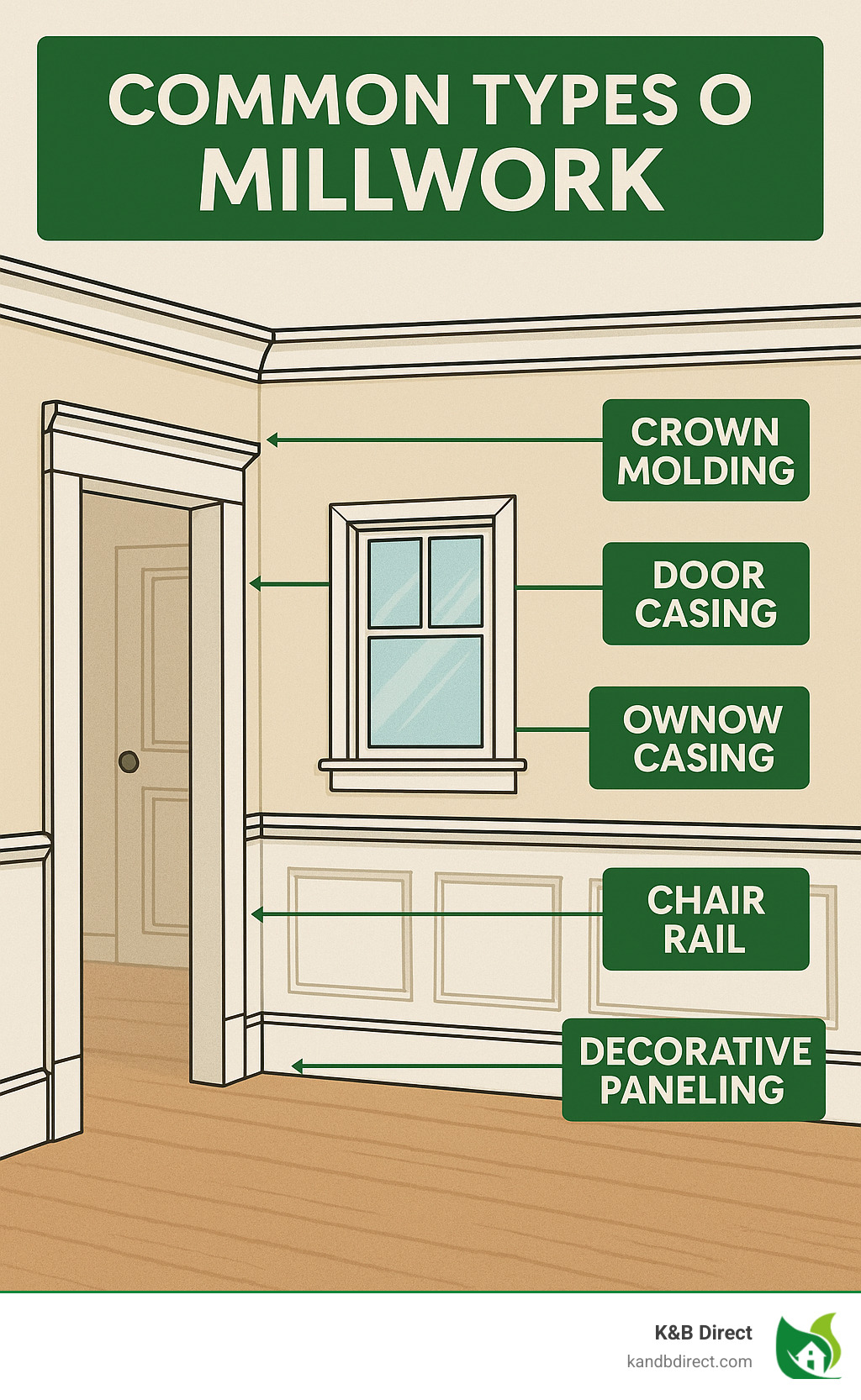
Think of architectural millwork as the finishing touches that turn a house into a home. It’s all the beautiful woodwork you see once construction is complete – the crown moulding that gracefully meets your ceiling, the door casings that frame your openings, and the baseboards that tie everything together at floor level.
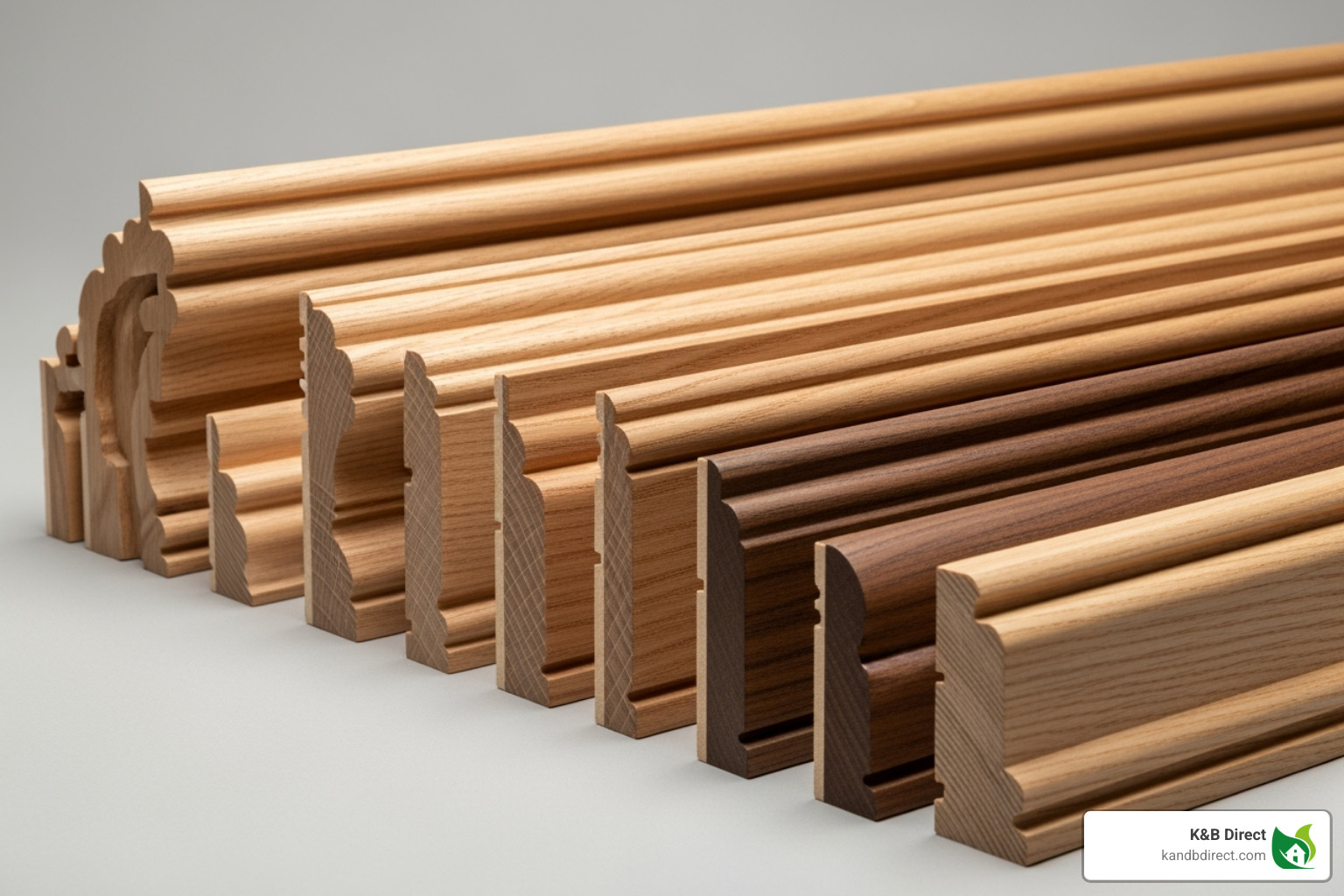
Millwork shops specialize in creating these interior finish components that bring character and warmth to your space. Whether it’s a simple baseboard or an elaborate staircase, each piece serves a purpose beyond just looking good.
The Heart of Home Character
Architectural millwork includes everything from protective wall trim to decorative paneling. Crown Moulding softens that harsh line where your wall meets the ceiling, creating an neat transition that makes rooms feel more finished and sophisticated.
Door Casing frames your doorways and windows, defining the character of each room. These pieces are often the most noticeable trim elements, so they really set the tone for your home’s style. Baseboards work hand-in-hand with casings to create a cohesive look while protecting your walls from vacuum cleaners and everyday scuffs.
Wall Trim like chair rails and wainscoting adds texture and visual interest to plain walls. These elements don’t just look great – they actually protect your walls from daily wear and tear, especially in high-traffic areas.
Beyond Basic Trim
Quality millwork shops offer much more than simple mouldings. Custom cabinetry creates built-in storage solutions that maximize space while matching your home’s architectural style perfectly. Stair parts including handrails, balusters, and newel posts can transform a basic staircase into a stunning focal point.
Paneling brings classic elegance to any room, whether you’re going for traditional wainscoting in a dining room or full wall paneling in a home office. These elements add depth and sophistication that paint alone simply can’t achieve.
Function Meets Beauty
Every piece of millwork serves both functional and decorative purposes. Baseboards protect your walls from furniture and foot traffic. Chair rails prevent chairs from damaging wall surfaces. Crown moulding hides imperfections where walls meet ceilings while adding architectural interest.
The best millwork seamlessly blends protection with style, defining spaces and adding texture that makes your home feel custom and thoughtfully designed. When you choose quality materials and craftsmanship, these finishing touches become investments that improve both your daily living experience and your home’s value.
Custom vs. Stock Millwork: Which is Right for You?
When you’re dreaming up a home improvement project that involves beautiful millwork, one of the big questions you’ll face is whether to go with custom pieces or readily available stock options. Both paths have their own wonderful benefits, and the best choice truly depends on what your project needs, how much you want to spend, and the unique look you’re aiming for.
Custom Millwork: Crafted Just for You
Imagine a piece of millwork that fits your home like a glove, designed specifically for your space and vision. That’s custom millwork! It’s made-to-order, meaning it’s crafted just for your project. This gives you incredible freedom in design and ensures a perfect, seamless fit. Think of it as bringing your unique ideas to life – whether you’re recreating historical details that are simply not found anywhere else, building a one-of-a-kind bookshelf, or needing a piece that flawlessly matches your home’s existing architectural style.
When you work with specialized millwork shops for custom pieces, you often get to enjoy superior craftsmanship and higher-quality materials. Artisans pour their expertise into every curve and cut, ensuring precision and beauty. They can turn complex ideas into stunning realities, often using advanced tools to achieve perfection. This approach means your millwork won’t just be pretty; it will be a true work of art, built to last.
Stock Millwork: Ready and Reliable
On the flip side, stock millwork is made up of mass-produced, standard shapes and sizes. These are the pieces you can often find readily available at building supply stores. The big advantages here are usually cost and speed. Stock options are typically more budget-friendly and can be picked up right away, making them perfect for projects with tighter deadlines or when you’re looking for common, widely accepted designs.
While stock millwork offers amazing convenience and affordability, it does come with a bit less design flexibility than custom pieces. You’re generally choosing from existing profiles rather than creating something entirely new. However, for many everyday uses – like standard baseboards, door casings, or simple crown mouldings – stock millwork provides a perfectly suitable and high-quality solution that looks fantastic without breaking the bank.
Here’s a quick peek at how they stack up:
| Criteria | Custom Millwork | Stock Millwork |
|---|---|---|
| Cost | Higher, due to specialized design and labor | Lower, due to mass production |
| Design Flexibility | Unlimited; custom to unique specifications | Limited to standard profiles and sizes |
| Lead Time | Longer, due to design, fabrication, and finishing | Shorter; readily available off-the-shelf |
| Material Quality | Often higher-grade, specific to client preference | Consistent, but typically standard grades |
| Installation | May require specialized skills for complex pieces | Generally straightforward for standard applications |
The choice between custom and stock millwork boils down to what your specific project needs. If you’re dreaming of intricate, truly unique, or historically accurate designs, custom millwork is an investment in unparalleled quality and individuality. But if you’re looking for standard applications where budget and a quick turnaround are key, stock millwork provides an excellent, efficient solution. We’re always here to help you weigh these choices, making sure you pick the perfect fit for your home and your budget! Learn more about custom cabinet options to see how custom fits into your home.
The Journey of a Millwork Piece: From Design to Installation
Have you ever wondered how a raw piece of wood transforms into the beautiful crown moulding or the intricate custom cabinet in your home? It’s a fascinating journey that combines artistic vision, careful craftsmanship, and increasingly, cutting-edge technology.

The Custom Millwork Process
Creating custom millwork is a detailed, multi-step process. Each step ensures every piece is perfect for your home.
It all starts with Design & Consultation. This is where your vision truly begins to take shape. Reputable millwork shops will sit down with you. They listen to your ideas and understand the style of your home. They often work with designers or architects to bring these ideas to life. This involves creating detailed sketches, realistic 3D renderings, and using advanced CAD (Computer-Aided Design) software. This careful planning ensures everyone is on the same page and the final product is exactly what you dreamed of.
Next comes Material Selection. Choosing the right material is super important. You’ll pick from different wood types like solid woods (think oak, maple, cherry, or even poplar). Or you might choose engineered wood products like MDF (Medium-Density Fibreboard) and Finger-Jointed Pine (FJP). Sometimes, composite materials are also an option. Each material has its own unique look and feel. They all offer different levels of durability and can be finished in various ways. Many millwork shops also focus on sustainable practices, choosing materials and methods that are better for the environment.
Once the design and materials are set, it’s time for Fabrication & Finishing. This is where skilled artisans get to work. They use precise cutting and shaping techniques. The wood pieces are joined together with great care. You’ll see true craftsmanship in the tight joints and smooth surfaces. After the pieces are shaped, they are finished. This means applying stains, paints, or clear coats. These finishes protect the wood and give it the perfect look.
The final step is Installation. This is when the millwork comes to life in your home. Professional installation ensures everything fits perfectly. It’s about careful handling and precise measurements. The goal is a seamless, built-in look that truly lifts your space.
The Role of Technology in Modern Millwork
While traditional skills are key, technology plays a big role in modern millwork shops.
CNC Machining (Computer Numerical Control) has changed the game. These automated machines can make incredibly precise cuts. They can create intricate carvings and complex patterns with amazing speed. This not only makes production faster but also allows for designs that would be very hard to make by hand.
Software Integration links design directly to production. CAD programs can send instructions straight to CNC machines. This means what you see on the screen is exactly what gets made in wood. This smart connection reduces errors and helps cut down on waste. It also allows for more custom options at a better price.
See examples of high-end custom work from K&B Direct.
Hallmarks of Quality Craftsmanship
How can you tell if millwork is truly high-quality? It’s all in the details.
Many top millwork shops follow AWI standards. AWI stands for Architectural Woodwork Institute. These are like gold standards for quality in the industry. Shops that follow these rules deliver excellent work.
Look for Tight Joints and Smooth Finishes. There should be no gaps in the joints. The surfaces should feel perfectly smooth, with no rough spots or splinters. The finish itself should look even and be durable.
Good Quality Control is also a must. Reputable shops have strict checks at every step. This hands-on approach ensures every piece meets high quality standards before it leaves the workshop.
Finally, the skill of Experienced Artisans and Calibrated Equipment makes a huge difference. Talented craftspeople, working with well-maintained and precise tools, are essential. They ensure you get consistent, beautiful results every time.
How to Choose the Right Millwork Shop
Choosing the right millwork shop is one of the most important decisions you’ll make for your home improvement project. It’s truly about finding a partner who understands your vision, delivers exceptional quality, and works with professionalism and reliability. You want a team that’s not just cutting wood, but crafting pieces that will bring your home to life!

Key Factors to Consider When Choosing a Shop
When you’re ready to find your perfect millwork partner, here are a few key things to look for:
First, always start by checking out their portfolio. This is like a visual resume for a millwork shop! You’ll want to see a range of their past work to understand their versatility and the consistent quality of their craftsmanship. Look closely: Do the finishes look clean and smooth? Are the joints tight and seamless? This sneak peek into their previous projects will give you a great idea if their style and attention to detail match your own. Feel free to View our project gallery to see the diversity and quality of work we’ve done here at K&B Direct.
Next, consider their experience and reputation. A shop that has been around for many years often signals reliability and a track record of consistent quality. Don’t be shy about asking for customer testimonials or checking online reviews. What do other homeowners say about their experience? A shop with a strong reputation for professionalism, meeting schedules, and handling any issues promptly is truly invaluable. You want to partner with a team that consistently earns high praise for their dedication to excellence.
Think about their capabilities and specialization too. Does the shop focus mainly on custom work, or do they primarily offer standard, stock options? Do they have expertise with the specific materials you prefer, like solid wood or engineered options such as MDF? Are they up-to-date with modern technology, like CNC machining, which can ensure precision and efficiency? Understanding their unique strengths and offerings ensures they can perfectly meet your project’s specific needs, whether you’re looking for something unique or a reliable standard.
Finally, don’t underestimate the importance of customer service and communication. A truly great millwork shop will prioritize clear and effective communication from start to finish. They should genuinely listen to your needs, offer creative and budget-friendly solutions, and be flexible with timelines. You want a partner who makes you feel heard and supported throughout the entire process, making your project as smooth and enjoyable as possible.
Questions to Ask Potential Millwork Shops
Once you’ve narrowed down your choices, preparing a few key questions will help you make a truly informed decision. Here are some great ones to get you started:
- What is your design process? Do they offer sketches, 3D renderings, or detailed CAD drawings? How much will you be involved in the creative design phase?
- Can you provide references from recent clients? Chatting with past customers can offer invaluable insights into their real-world experience.
- What is your typical project timeline from design to installation? Understanding lead times is super important for planning your overall project schedule.
- How do you ensure quality and craftsmanship in your products? Ask about their specific quality control measures, any industry standards they follow, and the experience level of their artisans.
- What materials do you commonly work with, and why do you recommend them for certain applications? This helps you gauge their material expertise and ensures they can guide you to the best choice for your home.
- Do you handle installation, or do you recommend trusted installers? Knowing this upfront helps you plan the next steps seamlessly.
By asking these questions and thoroughly vetting potential millwork shops, you’ll be well on your way to finding a partner who can bring your vision to life with the quality and care your home truly deserves. At K&B Direct, we’re always ready to discuss your project and demonstrate our commitment to offering you top-quality products at unbeatable prices with friendly service. Analyze a sample service offering from K&B Direct.
Frequently Asked Questions about Millwork
Over the years, I’ve noticed that homeowners often have similar questions when they’re exploring millwork options. Whether you’re visiting millwork shops for the first time or you’re already deep into planning your project, these are the questions that come up most often in our conversations with customers.
What is the difference between millwork and casework?
This question comes up all the time, and honestly, I don’t blame anyone for being confused! Even people in the industry sometimes use these terms interchangeably, but there’s actually a helpful distinction that can guide your project planning.
Millwork is the broader category – it includes any wood products that are manufactured in a mill and then installed in your home. Think of millwork as the architectural jewelry of your house. Crown moulding that gracefully transitions from wall to ceiling, door casings that frame your openings, baseboards that protect and finish your walls, stair parts like handrails and balusters, and decorative wall paneling all fall into this category. These pieces typically become permanent parts of your home’s architecture.
Casework, on the other hand, is more specific – it refers to those box-like enclosures that provide storage or display space. Your kitchen cabinets are casework. So are bathroom vanities, built-in bookshelves, and custom entertainment centers. While casework is technically a type of millwork, it’s distinguished by its function as storage furniture that’s often built-in or custom-fitted to your space.
Here’s an easy way to remember it: if it stores something or creates an enclosed space, it’s probably casework. If it’s decorative trim or architectural detail, it’s millwork but not casework.
What are the most popular materials for millwork?
The material you choose for your millwork project makes a huge difference in both the final look and your budget. When customers visit our showroom, I always start by explaining the main options and their best uses.
Solid woods remain the premium choice for many homeowners, and for good reason. Oak brings that classic, prominent grain pattern that works beautifully in traditional and rustic settings. Maple offers a fine, smooth grain that takes paint exceptionally well – perfect for that clean, contemporary look many of our customers love. Cherry is the showstopper with its rich, reddish-brown color that actually deepens and becomes more beautiful with age. Poplar is a smart choice for painted applications because of its uniform texture and smooth finish, plus it’s more budget-friendly than other hardwoods.
MDF (Medium-Density Fibreboard) has become incredibly popular, especially for painted millwork. This engineered wood product is made from wood fibers, resin, and wax pressed into dense panels. What I love about MDF is how stable it is – no warping or cracking like you might get with solid wood. It takes paint like a dream and gives you that perfectly smooth finish. For painted crown moulding, trim, and cabinet components where you want a flawless appearance, MDF is hard to beat.
Finger-Jointed Pine (FJP) is another smart option that many millwork shops recommend. It’s made from shorter pieces of pine joined together with those distinctive finger-like cuts. This process actually makes it more stable than solid pine boards, and it’s perfect for longer runs of painted trim where you need consistent, straight pieces without breaking the bank.
The beauty of working with quality millwork shops is that we can help you choose the right material based on your specific project, budget, and the look you’re trying to achieve.
How do I maintain my wood millwork?
Once you’ve invested in beautiful millwork, you’ll want to keep it looking great for years to come. The good news is that proper maintenance isn’t complicated – it just requires a little attention and the right approach.
Regular cleaning is your first line of defense. A soft, dry cloth for dusting works perfectly for routine maintenance. When you need to do deeper cleaning, use a slightly damp cloth with a mild, pH-neutral wood cleaner, but always follow up immediately with a dry cloth. Wood and standing moisture don’t mix well, so quick drying is key. Skip the harsh chemicals or abrasive cleaners – they’ll do more harm than good.
Scratch repair is something most homeowners can handle themselves for minor damage. Touch-up pens, wood repair kits, or even the old trick of rubbing a walnut over small scratches can work wonders on natural wood finishes. For deeper scratches that go through the finish, you might need professional help or some light sanding and refinishing.
Humidity control is probably the most important thing you can do for your millwork’s long-term health. Wood naturally expands and contracts with humidity changes, and extreme fluctuations can cause warping, cracking, or swelling. Keeping your home’s humidity between 35-55% with a humidifier or dehumidifier will significantly extend the life of your millwork investment.
Don’t forget about protection from sunlight – prolonged direct sun exposure can fade even the best finishes over time. UV-protective window treatments can help, or simply be mindful of how sunlight hits your millwork throughout the day.
Finally, avoid excessive moisture whenever possible. Wipe up spills immediately, and be careful about placing potted plants directly on wood surfaces without protective saucers underneath.
With these simple maintenance habits, the beautiful millwork you choose today will continue enhancing your home’s character for decades to come.
Conclusion
Well, there you have it! We’ve taken quite a journey through architectural millwork. It’s clear that these beautiful wood details are so much more than just trim. They’re the elements that truly define your home’s character, elevating its style, protecting your walls, and even boosting its value. From neat crown moulding to custom cabinetry, the right millwork can transform an ordinary room into a space that feels truly special and uniquely yours.
Bringing your vision to life means finding the right partner. Choosing the best millwork shop is absolutely key to your project’s success. You’ll want a team that not only understands craftsmanship but also shares your vision. Look for those who use quality materials, accept modern technology, and have a proven track record of bringing dreams to reality. A great millwork partner offers experience, a solid reputation, and a genuine commitment to making you happy.
That’s where we come in! At K&B Direct, we’re passionate about helping homeowners like you achieve their dream home aesthetics. We’re proud to offer high-quality millwork products at prices that are truly unbeatable. And you’ll always find friendly service here, because we believe that creating a beautiful home shouldn’t break the bank or be a stressful experience. Our expertise in kitchen and bathroom solutions naturally extends to providing the perfect mouldings and millwork to complete any space, ensuring every detail is just right.
Ready to see the difference quality millwork can make in your home? We invite you to explore our complete collection and find how we can help you create the space you’ve always dreamed of.