
Why Finding the Right Baseboard Trim Suppliers Matters for Your Renovation
Finding the right baseboard trim suppliers is a crucial step in any home improvement project. Whether you are looking for local delivery, a wide selection of wood species, or moisture-resistant options for bathrooms, the right partner makes all the difference.
Baseboards might not be the first thing on your renovation checklist — but they make a bigger difference than most people expect. They cover the gap between your walls and floors, protect drywall from scuffs and kicks, and tie your entire room together visually.
The challenge? Not all suppliers carry the same profiles, materials, or species. Some focus on volume. Others specialize in hardwood. A few offer custom milling. Knowing who stocks what — and the speed of delivery — saves a lot of headaches mid-project.
I’m Eryk Piatkowski, owner of K&B Direct, and over more than a decade of helping homeowners and renovators source quality millwork, I’ve worked with a wide range of baseboard trim suppliers to match the right profiles and materials to each project. Let’s walk through everything you need to know to make a confident choice.
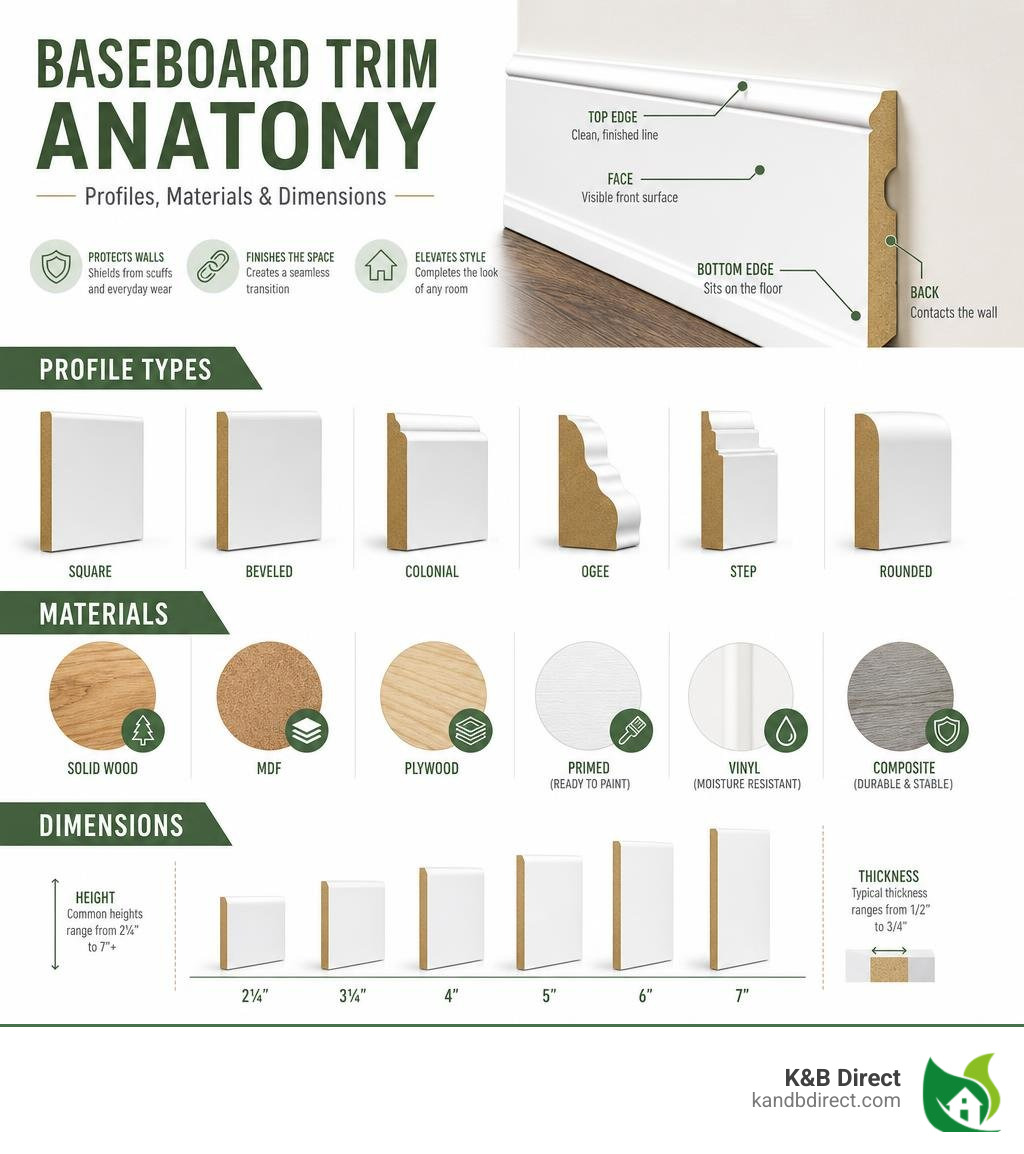
Basic Baseboard trim suppliers terms:
Key Types and Profiles Offered by Baseboard Trim Suppliers
When you begin exploring options with local millwork partners, you will quickly notice that the sheer variety of shapes and styles can be overwhelming. The profile refers to the cross-sectional shape of the board. Choosing the right profile is essential because it sets the architectural tone for your entire home.
Whether you are aiming for a historic restoration in Oak Park or a sleek, minimalist aesthetic in a Schaumburg townhouse, your choice of profile will define the transition between your flooring and your walls. A mismatch can make a space feel visually disjointed, which is why we always recommend reviewing Molding and Baseboards options early in your planning phase.
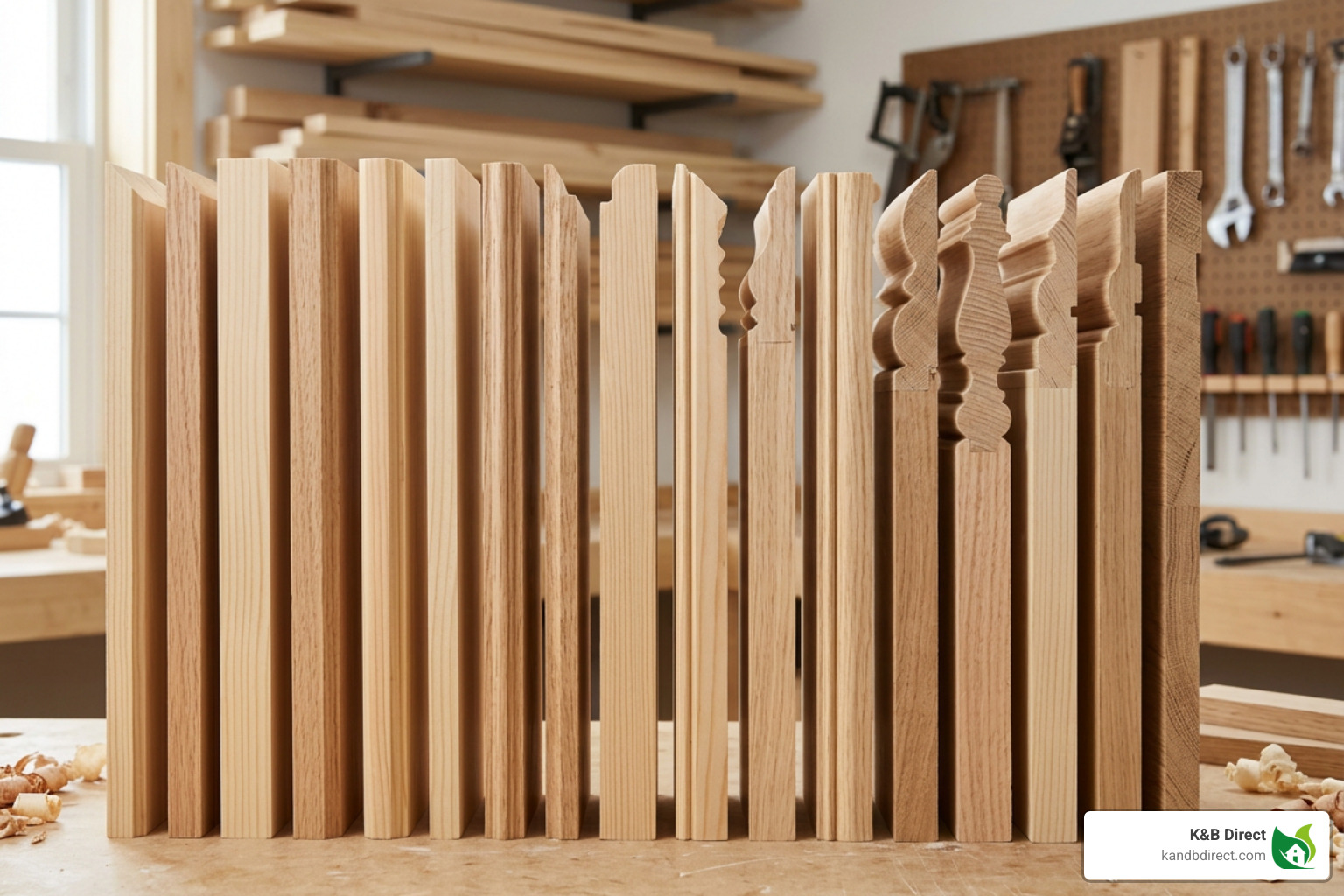
Traditional Profiles from Baseboard Trim Suppliers
Traditional profiles are characterized by elegant curves, stepped details, and classic proportions. These designs have stood the test of time and are perfect for restoring older homes or adding a touch of formal elegance to newer constructions.
- Colonial Base: This is perhaps the most recognizable style available. It features a smooth, flat lower section topped with a gentle, flowing wave profile. It is highly versatile and works beautifully in classic suburban homes. You can learn more about its history and dimensions in our comprehensive Baseboard Moulding Guide.
- Victorian Base: For those who appreciate grand architectural statements, Victorian profiles are much taller and feature intricate, deeply carved details. These profiles are ideal for high ceilings, where standard trim would look swallowed up by the wall space.
- Samuel Base: A stately, layered profile that offers deep shadow lines. This style is favored by designers who want the trim to serve as a distinct architectural feature rather than a subtle background element.
Modern and Minimalist Profiles from Baseboard Trim Suppliers
If your aesthetic leans toward clean lines and uncluttered spaces, modern profiles are the perfect fit. Modern design prioritizes simplicity and structural honesty, focusing on geometric precision rather than ornate carvings.
- Flat Stock (Square Edge): This profile is exactly what it sounds like—a clean, rectangular board with sharp, 90-degree edges. It is incredibly popular in contemporary builds and industrial-style lofts because it creates a crisp, no-nonsense border.
- Beveled Edge: Similar to flat stock, but with a slight angle cut into the top edge. This subtle slope prevents dust from collecting on top of the trim while maintaining a highly streamlined, modern appearance.
- Contemporary Stepped: This style utilizes a series of sharp, recessed steps at the top of the board. It adds a subtle architectural interest without the soft curves found in traditional millwork.
Finding a partner that stocks these diverse options is simple when you consult a trusted Molding Supplier Baseboards Trim specialist who can guide you through physical samples.
Material Selection: Pros and Cons of Common Trim Materials
The material you choose impacts not only the final appearance of your trim but also its durability, moisture resistance, and paintability. Different rooms in your home experience different environmental stressors, meaning a material that works perfectly in a dry living room might fail miserably in a damp basement.
| Material | Pros | Cons | Best Suited For |
|---|---|---|---|
| MDF | Exceptionally smooth, highly consistent, paint-ready, economical | Sensitive to moisture, cannot be stained | Living rooms, bedrooms, hallways |
| Finger-Jointed Pine | Real wood feel, less prone to warping than solid wood, easy to nail | Visible joints if not primed properly, minor imperfections | General interior trim, painted finishes |
| Hardwood | Exquisite natural grain, highly durable, can be stained | More substantial investment, requires careful cutting | High-end spaces, historic restorations |
| PVC | Completely waterproof, rot-resistant, highly flexible | Synthetic appearance, limited to painted finishes | Bathrooms, basements, exteriors |
For a deeper dive into the manufacturing and specifications of these materials, check out our guide on Wood Moulding.
Engineered Wood and MDF Options
Medium-Density Fiberboard (MDF) has become the industry standard for painted interior trim. Made from compressed wood fibers and resin, MDF is incredibly stable and uniform.
- Consistency: Unlike natural wood, MDF has no knots, grain patterns, or warping tendencies. Every inch of the board is identical to the next.
- Paint-Ready: Most suppliers deliver MDF pre-primed. The surface is exceptionally smooth, allowing for a flawless, brush-stroke-free finish.
- Affordability: It offers an incredibly budget-friendly way to trim an entire home without compromising on visual appeal.
When volume and consistency are your top priorities, checking out Mouldings Millwork catalogs will show you just how extensive the MDF selection has become.
Natural Wood and Hardwood Species
For those who want the warmth and authenticity of real wood grain, natural species are unmatched. Natural wood can be stained to highlight its unique character or painted for a premium, heavy-duty finish.
- Red Oak & White Oak: Known for their exceptional hardness and prominent grain patterns, these woods are perfect for high-traffic areas where durability is paramount.
- Poplar: A favorite among professional painters. Poplar is a hardwood with a tight, even grain that takes paint beautifully and resists denting far better than softwoods.
- Maple & Cherry: Premium hardwoods often reserved for formal dining rooms, libraries, or custom cabinetry integration.
- Walnut: A rich, dark wood that offers an unparalleled level of luxury when finished with a clear protective coat.
If you are planning a high-end project in Elmhurst or Glenview, exploring Hardwood Moulding and Trim options will give your space a highly customized, luxurious feel.
Moisture-Resistant Synthetics and PVC
In areas prone to high humidity, splashing water, or damp concrete, traditional wood and MDF can swell, warp, and rot. This is where synthetic materials shine.
- Waterproof Nature: Cellular PVC does not absorb water. It is completely impervious to rot, mold, and mildew, making it the premier choice for bathrooms, laundry rooms, and basements.
- Flexibility: PVC can easily bend around curved walls without cracking or splitting.
- Durability: Premium synthetic options offer products with limited lifetime warranties, ensuring your trim looks pristine for decades.
- Prefinished Options: Many synthetic products feature solar-reflective, color-through technology to prevent fading and heat buildup.
To explore the ways synthetics can protect your home’s vulnerable areas, read through our Synthetic Molding Options overview.
Key Factors When Selecting a Millwork Partner
Choosing a supplier is about more than just finding the lowest rate per linear unit. A true millwork partner supports your project from initial design to final delivery, ensuring you have the exact quantities and profiles needed to keep your timeline on track.
If you are managing a project in Niles, Des Plaines, or Park Ridge, proximity and reliable logistics are crucial. Working with a local Molding Supplier ensures you can easily inspect physical samples and avoid long transit delays. For widely recognized millwork terminology and quality expectations, the Architectural Woodwork Institute is also a helpful industry resource.
Customization and Specialty Profiles
Not every home fits standard, off-the-shelf profiles. If you are renovating a historic home in Oak Park or matching existing trim during an addition in Mount Prospect, you may need custom milling services.
Many premium suppliers can replicate historical profiles. The process typically involves:
- Providing a physical sample or a CAD drawing of the desired shape.
- The supplier grinding a custom steel knife to match the exact silhouette.
- Milling the profile out of your chosen wood species.
While custom runs require a higher initial setup investment, they are the only way to preserve the architectural integrity of historic properties. You can explore the management of these custom runs by reading about Custom Millwork and Molding.
Delivery, Pickup, and Distribution Logistics
The logistics of getting your trim to the job site can make or break your schedule. Baseboards are long, awkward items that require specialized handling.
- Same-Day Pickup: For quick fixes or smaller projects, suppliers with local warehouses in the Chicagoland area allow you to pick up materials immediately.
- LTL Freight & Overlength Fees: Because standard baseboard lengths often range from long spans to maximum lengths, they cannot be shipped via standard parcel carriers. Shipping these “extreme overlength” items requires LTL (Less-Than-Truckload) freight, which often incurs additional handling fees.
- Local Delivery: Many regional suppliers offer dedicated flat-rate delivery truck services directly to your home or job site, which is often much safer and more reliable than third-party freight.
To understand the coordination of these deliveries and avoid unexpected shipping fees, consult our guide on Baseboard Trim Supplier Logistics.
Installation, Finishing, and Maintenance Best Practices
Once you have sourced your perfect trim from a reliable supplier, the final steps involve proper preparation, finishing, and ongoing care. A high-quality installation can make budget-friendly materials look incredibly premium, while a rushed installation can ruin even the finest hardwoods.
Primed vs. Unfinished Baseboards
One of the first decisions you will face when ordering from a supplier is whether to purchase primed or unfinished boards.
- Primed Boards: These come factory-coated with a high-quality primer. This saves an immense amount of time on-site, as the boards are ready for their final paint coats immediately after installation. MDF and finger-jointed pine are almost always sold pre-primed.
- Unfinished Boards: These are raw wood boards. They are essential if you plan to apply a wood stain or a clear protective coat. Unfinished hardwood allows you to customize the color to match your existing hardwood flooring or cabinetry perfectly.
For a complete breakdown of preparing both options for your walls, check out The Ultimate Guide to Molding and Baseboards.
Long-Term Maintenance and Care
To keep your baseboards looking as pristine as the day they were installed, establish a simple maintenance routine:
- Regular Dusting: Use a soft microfiber cloth or a vacuum brush attachment to remove dust from the top crevices of the profiles.
- Gentle Cleaning: For scuffs and dirt, use a soft sponge dampened with a mixture of warm water and a mild detergent. Avoid harsh chemical cleaners, which can dull the paint or break down wood finishes.
- Moisture Protection: In bathrooms or kitchens, ensure any caulked joints along the top and bottom of the trim remain sealed to prevent water from slipping behind the boards.
Our Types of Moulding guide offers additional tips on preserving different material types over their lifespan, while our Baseboard Care and Maintenance Guide provides step-by-step instructions for fixing minor dents and scratches.
Frequently Asked Questions About Baseboard Trim
What is the standard length for baseboard trim?
Most wood and MDF baseboards are sold in standard long spans. Synthetic materials like PVC can be found in even longer options. Using longer spans is ideal for large rooms because it minimizes the number of visible joints along a single wall. For more details on sizing, see our Baseboard Trim specifications page.
Can PVC trim be used for interior baseboards?
Absolutely. While PVC was originally designed for exterior use, its complete resistance to water makes it an exceptional choice for interior areas prone to moisture, such as bathrooms, basements, and laundry rooms. It paints beautifully with 100% acrylic latex paint. Learn more about synthetic applications in our Molding section.
Matching Baseboards with Existing Door Casings
To achieve a cohesive look throughout your home, your baseboards should complement your door and window casings. A good rule of thumb is that your baseboards should be slightly thicker and taller than your casings. This creates a logical visual transition as the trim wraps around the room. For design ideas, explore our guide on Matching Molding and Baseboards.
Conclusion
Your baseboards are the finishing touch that transforms a house into a beautifully resolved home. By understanding the different profiles, selecting the right materials for each room’s environment, and partnering with a reliable supplier, you can achieve a stunning look that lasts for decades.
At K&B Direct, we are dedicated to helping homeowners and builders across Schiller Park, Rosemont, Franklin Park, River Grove, Norridge, Bensenville, and the surrounding Chicago suburbs realize their dream home aesthetics. We offer a curated selection of top-quality kitchen and bathroom cabinets, doors, windows, and premium mouldings at unbeatable, lowest possible rates—all backed by our signature warm, friendly service.
Ready to find the perfect finishing touch for your next project? Explore our premium baseboard options or visit one of our local showrooms today!