Why 6 Vinyl Baseboard Is the Smart Choice for Tall Wall Protection
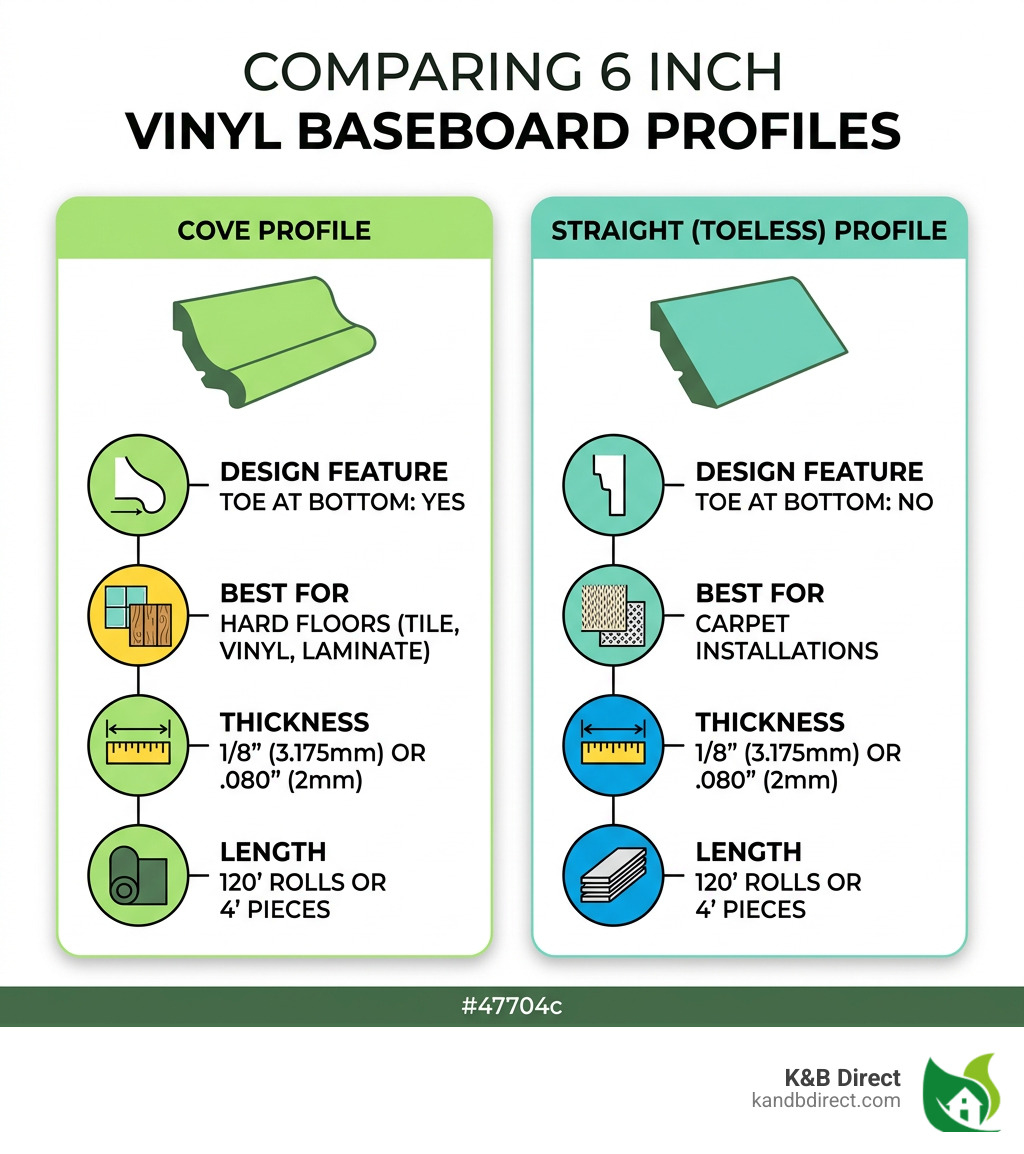
6 vinyl baseboard is a 6-inch-tall strip of thermoplastic vinyl material installed along the base of walls to protect them from scuffs, moisture, and everyday wear. Here’s a quick overview to help you compare your options:
| Feature | Cove Profile | Straight (Toeless) Profile |
|---|---|---|
| Best for | Hard floors (tile, vinyl, laminate) | Carpet installations |
| Toe at bottom | Yes | No |
| Common thickness | 1/8″ (3.175mm) or .080″ (2mm) | 1/8″ (3.175mm) or .080″ (2mm) |
| Typical length | 120′ rolls or 4′ pieces | 120′ rolls or 4′ pieces |
| Top brands | Roppe, Tarkett, Flexco, Mannington/Burke | Roppe, Tarkett, Flexco, Mannington/Burke |
Vinyl wall base at the 6-inch height is one of the most popular choices for both residential renovations and commercial spaces. It offers more wall coverage than standard 4-inch options, which means better protection and a bolder finished look.
I’m Eryk Piatkowski, owner of K&B Direct, and over more than a decade of helping homeowners and professionals complete their spaces, I’ve guided countless renovation projects that include selecting the right 6 vinyl baseboard for kitchens, bathrooms, and beyond. Let’s break down everything you need to know to make the best choice for your project.
Simple guide to 6 vinyl baseboard terms:
Defining the 6 vinyl baseboard and Its Applications
When we talk about a 6 vinyl baseboard, we are referring to a resilient wall base made from a thermoplastic TV compound. Unlike traditional wood trim, this material is engineered to be incredibly tough against scuffs and scratches. This durability is often thanks to a co-extruded top layer that acts as a shield, ensuring the color stays vibrant even in high-traffic hallways or busy family kitchens.
In our experience serving the Chicagoland area—from the busy streets of Chicago to the quiet neighborhoods of Barrington and Lake Zurich—we’ve seen these 6-inch tall bases become a go-to for both commercial and residential living. Why? Because the extra height provides superior wall protection against vacuum cleaners, mops, and wandering toys. It also does a fantastic job of hiding imperfections at the bottom of the drywall.
Whether you are looking for a sleek, modern look for an apartment in Arlington Heights or a functional solution for a basement in Glen Ellyn, understanding the baseboard-trim options is the first step. For those who love the nitty-gritty details, you can even dive into the Vinyl Wall Base Technical Data to see the performance testing of these materials.
Material Benefits and Sustainability Features
At K&B Direct, we know our customers in places like Elmhurst and Schaumburg care about the environment as much as they care about their homes. Modern 6 vinyl baseboard options have come a long way in terms of sustainability. Many top-tier products now feature FloorScore certification, which means they meet strict indoor air quality standards.
Furthermore, these baseboards often utilize bio-based plasticizers without phthalates, derived from renewable resources. They may also meet NSF/ANSI 332 Level 1 sustainability standards. This makes pvc-floor-molding a responsible choice for families who want to avoid harsh chemicals while maintaining a beautiful home.
Maintenance is another huge “win” for vinyl. Because it is non-porous and moisture-resistant, it won’t rot or warp like wood. To keep it looking new, a simple wipe-down with a damp cloth is usually all it takes. For a deeper look at long-term care, you can refer to the Vinyl Wall Base Care & Maintenance guide provided by industry leaders.
Selecting Profiles and Thicknesses
Choosing the right look for your 6 vinyl baseboard involves two main decisions: the profile and the thickness (or gauge). These choices affect both the aesthetic and the longevity of the installation.
| Profile Type | Description | Best Use Case |
|---|---|---|
| Cove (with Toe) | Features a curved “toe” at the bottom that laps over the floor. | Ideal for vinyl, tile, and laminate to hide the expansion gap. |
| Straight (Toeless) | A flat, vertical profile that sits flush against the floor. | Perfect for carpeted rooms where the base can be tucked against the pile. |
If you are trying to decide which style fits your home’s architecture, our baseboard-moulding-guide can help you visualize the impact of different heights and shapes on a room’s feel.
Standard Thicknesses for 6 vinyl baseboard
Thickness is measured in “gauge,” and for a 6-inch base, you generally have two choices:
- 1/8″ (3.175mm): This is the heavy-duty option. It’s thicker, more rigid, and better at hiding significant wall irregularities. It’s the standard for commercial projects but is also excellent for high-traffic residential areas.
- .080″ (2mm): This is a slightly thinner, more flexible gauge. It is often more economical and works beautifully on walls that aren’t perfectly straight, as it can conform to slight curves more easily.
Understanding these base-cap-moulding-profiles-complete-guide details ensures that your trim doesn’t just look good on day one, but stays looking good for years.
Popular Colors and Finishes
Gone are the days when vinyl only came in “hospital beige.” Today, grey is the most popular color group, with over 1,000 different shades available across various brands. Brown tones are a close second, offering a warmer, more traditional look.
You can also choose between matte and shiny finishes.
- Matte finishes are great for hiding dust and fingerprints.
- Shiny finishes provide a clean, polished look and are even paintable in some cases if you use the right primer.
We always recommend that our customers in Wilmette or Northbrook request a sample before a large purchase. Colors can look very different on a computer screen than they do under your home’s specific lighting! For more on matching your trim to your walls, check out our pvc-base-cap-moulding-guide.
Professional Installation and Care
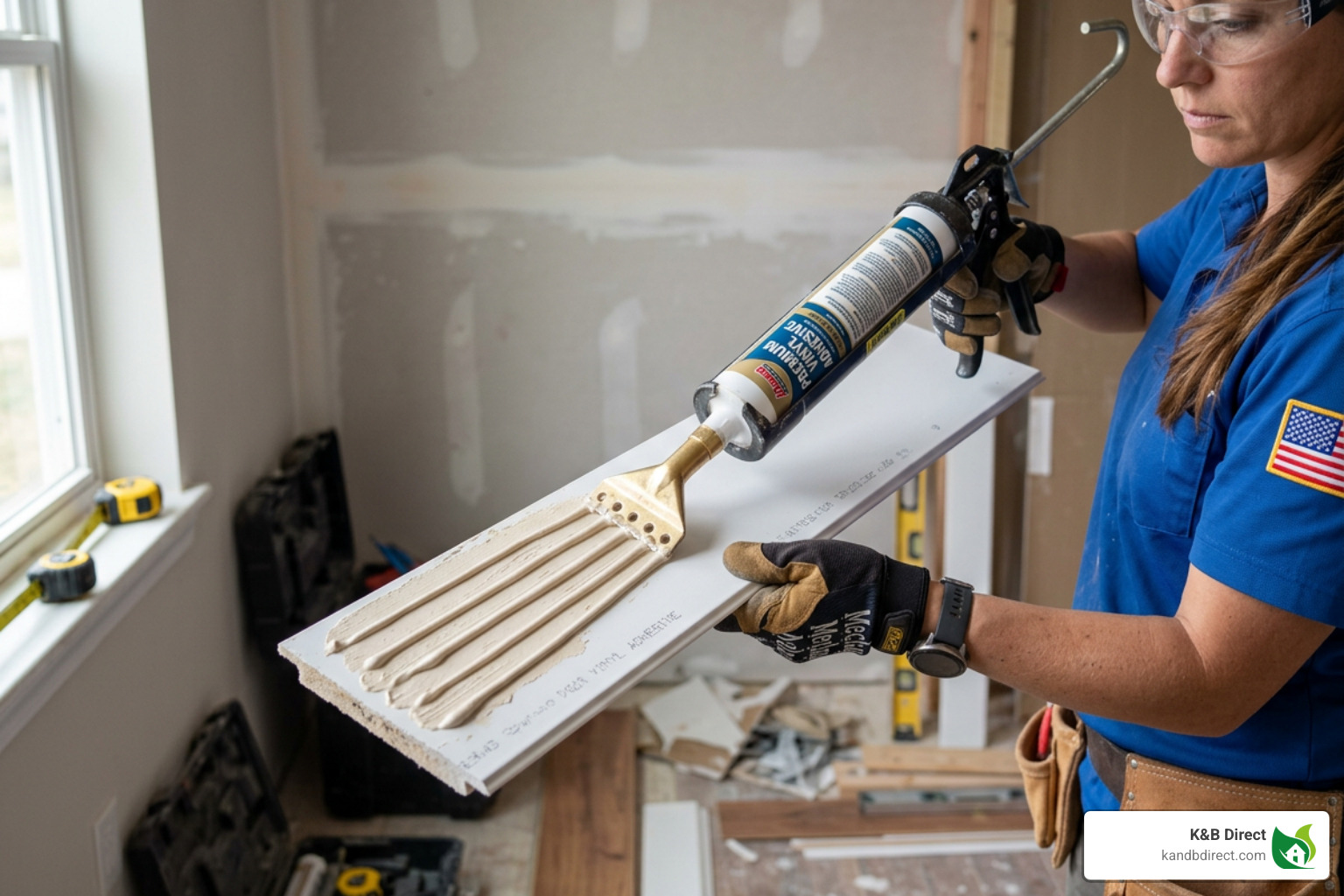
Installing a 6 vinyl baseboard is a straightforward process, but it requires the right tools to get that “pro” finish. Most professionals use 30-oz cartridges of specialized wall base adhesive.
One of our favorite tips for a seamless look is using a 3-hole or 5-hole nozzle on your caulking gun. This spreads the glue evenly across the back of the 6-inch tall material, ensuring it doesn’t “bridge” or pull away from the wall.
When it comes to corners, don’t just bend the material and hope for the best. For outside corners, we recommend “scoring” the back of the baseboard. This involves making a shallow vertical cut (about half the thickness of the material) on the back side where the corner will be. This allows the vinyl to wrap sharply around the corner without stressing the material. For more detailed tips, see our guide on Cutting baseboard corners.
If you want to see the step-by-step manufacturer recommendations, the Vinyl Wall Base Installation Guide is an invaluable resource.
Frequently Asked Questions
Standard Lengths for 6 vinyl baseboard
When you’re planning your project in Des Plaines or Mount Prospect, you need to know the packaging of the material. 6 vinyl baseboard is typically sold in three formats:
- 120-unit Coils: These are the most popular for large rooms because they minimize the number of seams.
- 100-unit Rolls: Often used for medium-sized projects.
- 4-unit Pieces (48 inches): These come in cartons (usually 25 or 30 pieces per box) and are much easier to handle for smaller rooms or if you’re working solo.
Having these options makes it easier to match the base-cap-moulding needs of your specific floor plan.
Profile Selection for Different Floor Types
We get asked this a lot: “Does it matter if I have carpet or tile?” Yes, it does!
- Cove Base: The “toe” at the bottom is designed to cover the gap between the wall and a hard floor (like tile or LVP). It also makes cleaning easier because there’s no sharp 90-degree angle for dirt to hide in.
- Straight Base: Since carpet is soft and has a “pile,” you don’t need a toe. The straight base sits on top of the carpet tack strip, creating a clean, vertical transition.
You can learn more about these transitions in our base-cap-moldings section.
Self-Adhesive Options vs Traditional Adhesive
Looking for a simpler installation method? There are self-adhesive 6 vinyl baseboard options available. These come with a pressure-sensitive tape already applied to the back.
- Pros: No messy glue, no caulking gun needed, and it’s very fast.
- Cons: In high-humidity areas like bathrooms or in very high-traffic commercial zones, traditional wet adhesive generally provides a stronger, more permanent bond.
If you decide to go the traditional route, following the correct Installation procedures is key to a long-lasting result.
Conclusion
At K&B Direct, our mission is to help you achieve your dream home aesthetics without breaking the bank. Whether you’re renovating a kitchen in Palatine or updating an office in Lombard, a 6 vinyl baseboard offers the perfect blend of durability, style, and protection.
We pride ourselves on offering top-quality mouldings at an excellent value, backed by the friendly service you expect from a local Illinois business. If you’re ready to find the perfect finishing touch for your floors, explore our full category/baseboard selection today. We can’t wait to help you bring your vision to life!