
The Quiet Power of 5mm Wood Trim in Home Renovation
5mm wood trim is one of the most underestimated finishing tools in interior design — thin enough to be subtle, but impactful enough to completely transform a cabinet door, wall panel, or furniture piece.
Quick answer: What is 5mm wood trim used for?
- Adding fine decorative detail to cabinet doors and drawer fronts
- Creating panel effects on walls without bulk
- Covering small gaps between flooring and skirting boards
- Framing mirrors, shelving edges, and furniture accents
- Finishing window and door reveals with a clean, minimal line
This slim profile sits at the lighter end of the moulding spectrum. Most standard mouldings range from 12mm to 30mm thick. At just 5mm, this trim offers a clean, modern look that thicker profiles simply can’t replicate — especially in kitchens and bathrooms where every millimetre of space matters.
It’s not a niche product either. Retailers like B&Q stock hundreds of moulding options, and manufacturers such as Richard Burbidge produce dedicated 5mm hardwood stripwood (5mm x 25mm x 2.4m) specifically for fine trimming and panel detailing.
The appeal is simple: big visual results, minimal material.
I’m Eryk Piatkowski, owner of K&B Direct, and over more than a decade of helping homeowners renovate kitchens and bathrooms, I’ve seen 5mm wood trim used to elevate everything from flat cabinet doors to bare wall panels. In this guide, I’ll walk you through everything you need to choose, install, and finish it with confidence.
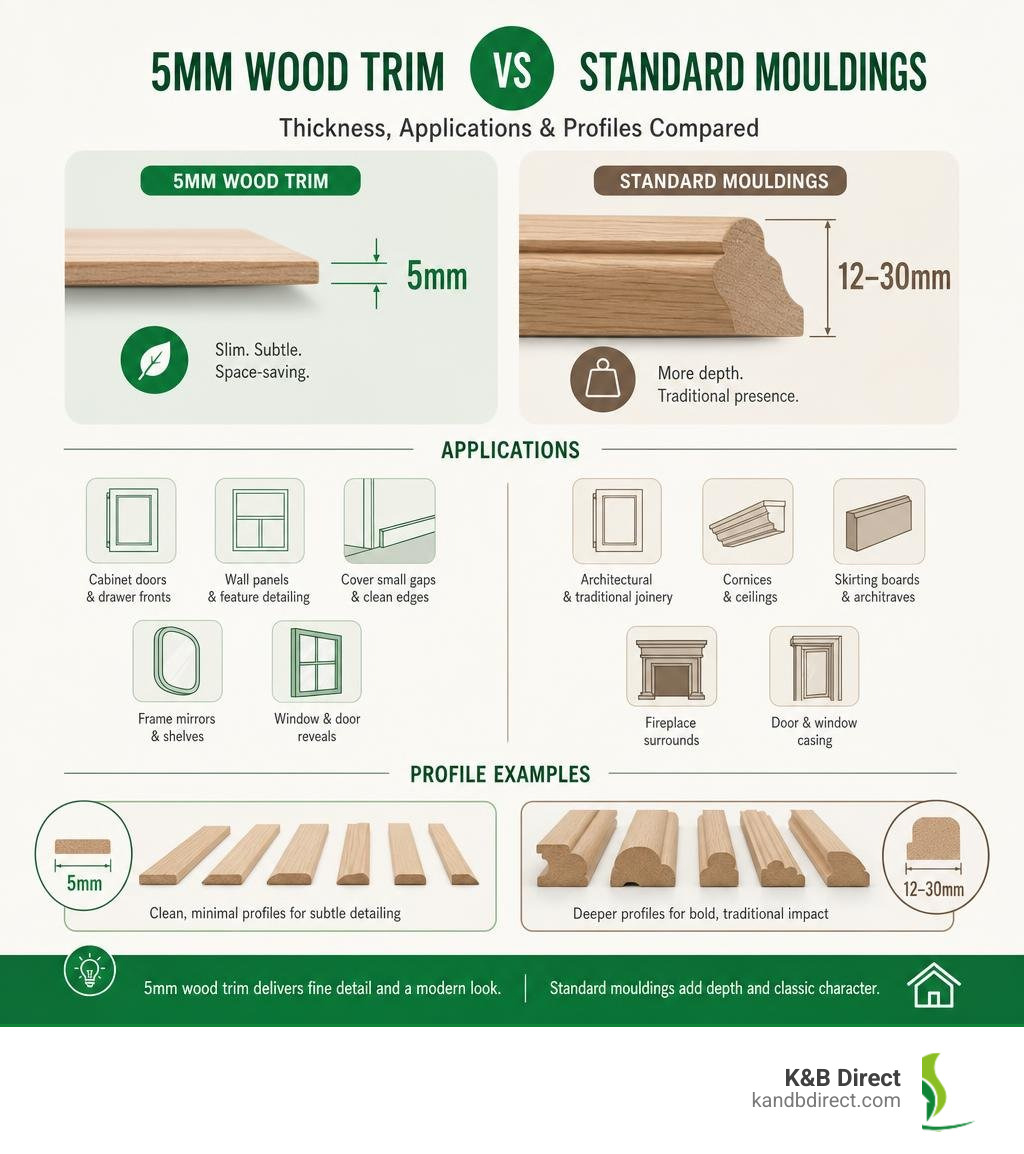
Basic 5mm wood trim terms:
Understanding 5mm Wood Trim and Its Unique Profile
When we talk about 5mm wood trim, we are looking at the ultra-slim end of the timber moulding spectrum. In lumber, “nominal size” refers to the dimensions of the wood before it is planed and finished. With a finished thickness of exactly 5mm (approximately 0.2 inches), this profile is incredibly lightweight and flexible.
Unlike heavy, traditional crown mouldings or thick baseboards, this ultra-thin wood moulding is designed to sit nearly flush against surfaces. Its lightweight design means it puts minimal stress on the adhesive or nails holding it in place. This makes it an exceptional choice for delicate cabinet doors, lightweight furniture, or wall panelling where you want to avoid a heavy, protruding edge.
The flexibility of a 5mm profile is another massive advantage. Have you ever tried to install a thick piece of oak trim against a wall that isn’t perfectly flat? It is a recipe for frustration. A slim 5mm strip can gently bend to accommodate minor wall curves, ensuring a tight, seamless fit without the need for heavy clamping. For those wanting to explore the full spectrum of moulding profiles, we have gathered More info about wood moulding options to help guide your design journey.
Comparing 5mm Wood Trim with Thicker Mouldings
To truly appreciate the value of 5mm wood trim, it helps to compare it to its thicker siblings, such as 12mm and 18mm profiles. The choice of thickness dictates the depth of the shadow line—the dark line cast by the edge of the trim which gives a wall or cabinet its visual depth.
While an 18mm trim creates a bold, dramatic shadow line that demands attention, a 5mm trim creates a soft, minimalist shadow. This subtle transition is highly desirable in modern, contemporary, or Scandinavian-style homes throughout our local service areas, from the historic houses of Oak Park to the modern condominiums in Rosemont.
| Feature | 5mm Wood Trim | 12mm Wood Trim | 18mm Wood Trim |
|---|---|---|---|
| Visual Weight | Minimalist, flush, subtle | Balanced, traditional | Bold, architectural, heavy |
| Flexibility | High (can follow slight curves) | Moderate | Very Low (requires flat surfaces) |
| Weight | Extremely light | Medium | Heavy |
| Best Application | Cabinet detailing, delicate panelling | Standard door frames, baseboards | Large feature walls, heavy cabinetry |
| Shadow Line | Soft, delicate | Defined, classic | Deep, dramatic |
For a deeper dive into how thicker profiles function in home design, you can Read about 18mm trim applications to see which thickness suits your specific goals.
Material Options and Species for 5mm Wood Trim
Choosing the right wood species is critical because a thinner profile means the natural characteristics of the wood—such as grain tightness and density—play a massive role in how the trim behaves during cutting and finishing.
- Pine: A soft, accessible wood that is incredibly easy to cut and shape. Pine is a popular choice for painted finishes. However, because it is a softwood, it requires gentle handling to avoid denting the thin 5mm profile.
- Oak: A dense, durable hardwood with a beautiful, prominent grain. Oak is perfect if you plan to stain your trim to highlight its natural beauty. It is highly resistant to wear and tear, making it excellent for high-traffic areas.
- Poplar: Often considered the painter’s dream wood. It has a very smooth, uniform texture and tight grain, meaning it takes primer and paint beautifully without showing grain texture through the topcoat.
- Light Hardwood: Products like the Richard Burbidge Light Hardwood Stripwood offer a fantastic balance of strength and ease of shaping. These light hardwoods provide a clean, smooth surface that is ready for a professional finish.
For those who appreciate the rustic charm and unique grain patterns of alternative hardwoods, our Alder Trim Boards Guide provides excellent insights into selecting timber that brings warmth and character to any room.
Creative Applications for Ultra-Thin Mouldings in Home Interiors
The beauty of 5mm wood trim lies in its versatility. Because it adds virtually no weight or bulk, you can apply it to surfaces that would otherwise reject thicker mouldings.
One of our absolute favorite applications is transforming plain, flat-panel cabinet doors into elegant shaker-style or detailed raised-panel doors. By cutting the trim to size and framing the outer edges of the cabinet fronts, you achieve an instant architectural upgrade. This is an incredibly popular update for homeowners in Niles and Glenview who want to refresh their kitchens without the massive expense of replacing entire cabinet units.
Wall panelling is another area where this thin profile shines. You can create sophisticated picture-frame moulding designs on your walls, giving the illusion of custom millwork. Because the trim is only 5mm thick, it won’t interfere with your furniture placement or protrude awkwardly into your walking paths.

Additionally, these slim profiles make exceptional cover strips. If you have a small gap where your flooring meets your skirting board, a pre-finished option like the Cover strip Solid wood skirting board can cover the transition seamlessly, providing a clean, white-lacquered finish that looks intentional and polished.
Selecting the Right Profile: Quadrant, Scotia, and Flat Strips
The shape, or profile, of your trim defines the design style of your space. Here is how to choose the right shape for your project:
- Flat Stripwood: Simple, rectangular strips that are perfect for modern, minimalist designs, shaker-style cabinets, and geometric wall panelling.
- Quadrant: Featuring a quarter-circle cross-section, quadrant trim is the go-to choice for softening internal corners, framing shelving, or hiding small expansion gaps along floor edges.
- Scotia: With its elegant concave curve, scotia trim creates a distinct, classic shadow line. It is highly favored for flooring transitions and traditional cabinetry details.
- Ogee and Ovolo: These classic, flowing S-curves bring a touch of traditional elegance. Use them for small picture frames, mirror borders, or detailed furniture embellishments.
Installation and Finishing Techniques for Thin Timber Profiles
Installing 5mm wood trim is an incredibly satisfying process, but its thin profile requires a delicate touch. Standard heavy-duty carpentry tools can easily split or crush this delicate wood.
First, let’s talk about cutting. We highly recommend using a fine-toothed hand saw paired with a high-quality miter box. Because the wood is so thin, a power miter saw can sometimes shatter the ends of the trim if the blade speed is too high or the teeth are too coarse. A hand saw gives you complete control, ensuring clean, perfect 45-degree angles for your corners.
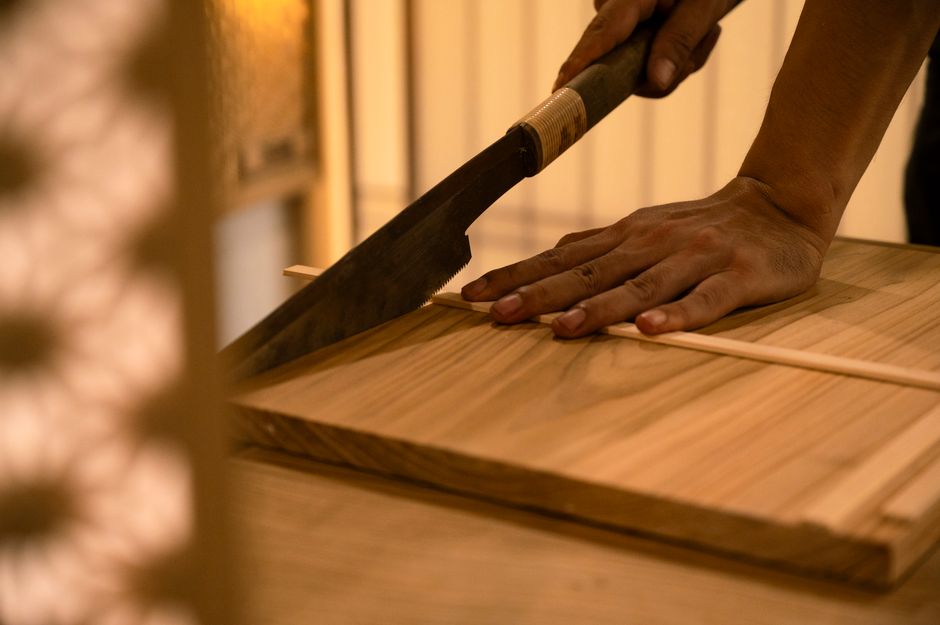
When it comes to securing the trim, adhesive is your best friend. A high-strength polyurethane grab adhesive or a quality wood glue will provide a permanent bond without putting any stress on the wood. For instant hold while the glue cures, we recommend using painter’s tape to hold the trim firmly against the surface.
If you must use mechanical fasteners, choose fine finishing pins or a 23-gauge pin nailer. Standard brad nails are too thick and will almost certainly split a 5mm strip. Always pre-drill your holes if you are nailing by hand near the very ends of the trim.
For finishing, sand the wood lightly with a fine 220-grit sandpaper to open the grain. If you are painting, apply a high-quality primer first—especially on softwoods like pine or porous woods like poplar—to ensure your topcoat goes on smoothly. If you prefer a stained look, apply a wood conditioner first to prevent blotchiness, followed by your chosen stain and a protective clear coat.
Moisture Performance and Humid Area Considerations
Using real wood trim in moisture-prone areas like bathrooms or around kitchen plinths requires special preparation. Wood naturally absorbs moisture from the air, which can cause it to swell, warp, or twist. Because 5mm wood trim has very little physical mass, it can react to humidity changes more rapidly than a thick block of timber.
To protect your beautiful wood trim in these environments, complete sealing is non-negotiable. You must seal all sides of the trim—including the back and the cut ends—before installation. This creates an impermeable barrier that prevents moisture from creeping into the wood fibers. A high-quality exterior-grade primer followed by a semi-gloss or gloss paint provides excellent protection. If you are staining, use a marine-grade polyurethane or a specialized outdoor varnish.
In areas of extreme humidity or direct water contact, some homeowners opt for uPVC alternatives. While uPVC is entirely waterproof, it lacks the warmth, texture, and paintability of real timber. By properly sealing your hardwood or pine trim, you can confidently enjoy the premium look of real wood even in your bathroom renovations.
Frequently Asked Questions about Thin Wood Mouldings
Are there ready-made 5mm trim products or must they be custom-cut?
Yes, there are many fantastic ready-made 5mm trim products available on the market today. Manufacturers produce a wide variety of flat stripwood, quadrant, and scotia profiles in this exact thickness, saving you the trouble of having to rip down larger timber boards on a table saw.
However, if you have a highly specific design in mind or require a rare wood species to match existing furniture in your home, custom-cutting is always an option. Local millwork shops can easily custom-mill trim to your exact specifications. For most standard projects, ready-made profiles are incredibly convenient and ready to paint or stain straight out of the package.
What are the pros and cons of using ultra-thin trim versus thicker options?
Like any design choice, using ultra-thin trim comes with its own set of unique advantages and trade-offs.
Pros:
- Incredible Flexibility: Easily conforms to slight curves in walls or cabinet doors.
- Ultra-Lightweight: Can be installed securely using high-quality adhesive alone, eliminating the need for complex nailing.
- Minimalist Aesthetic: Sits nearly flush, offering a sleek, modern look that doesn’t crowd small spaces.
- Easy to Work With: Can be cut quickly and quietly with simple hand tools.
Cons:
- Delicate Nature: Can split easily during installation if handled roughly or nailed without pre-drilling.
- Minimal Structural Support: Unlike thick trim, it cannot be used to bridge large structural gaps or support weight.
- Subtle Shadow Lines: If you are looking for a deep, dramatic architectural statement, this profile may feel too understated.
To help you decide which size best fits your upcoming project, take a look at our Guide to decorative wood trim sizes for a complete breakdown of your options.
Where can you source high-quality thin timber mouldings?
When looking for high-quality thin timber mouldings, you have several excellent avenues. Local timber merchants and specialized millwork suppliers are fantastic resources, especially if you are looking for specific hardwood species like oak, maple, or walnut.
If you are located in the greater Chicago area—whether you are shopping near Schaumburg, Des Plaines, Elmhurst, or Maywood—we invite you to visit us or reach out to our team. We specialize in sourcing top-tier mouldings, doors, and cabinet components that help you achieve a flawless finish. When selecting your trim, always inspect the lengths for straightness, and ensure there are no knots or defects that could compromise the strength of such a thin profile.
Conclusion
The beauty of a home renovation often lies in the smallest details. 5mm wood trim proves that you do not need bulky, heavy mouldings to make a massive design impact. Whether you are adding delicate paneling to a bedroom in Arlington Heights, refreshing kitchen cabinets in Bensenville, or finishing a bathroom transition in Mount Prospect, this slim profile offers the perfect blend of elegance, flexibility, and ease of use.
At K&B Direct, we are dedicated to helping you realize your dream home aesthetics. We believe in providing top-quality products with friendly, expert service to make your renovation journey as smooth and enjoyable as possible.
Ready to elevate your next home project with the perfect finishing touches? Explore the full range of Wood Trim and let us help you find the ideal profiles for your space today!